A statistic alone does not change society
Originally published in Global Voices in Spanish

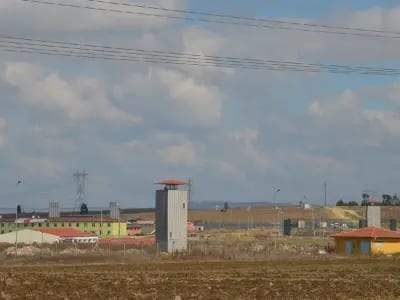
Silivri prison in Turkey. Image of Wikimedia Commons (CC BY-SA 4.0).
This article by Ahmet Kavruk, member of the Gündem Hapishane group in Turkey, was made with the grant programme Digital Sparkas part of the Regional Support Mechanism (SEA) project. It was implemented by the Metamorphosis Foundation and TechSoupin collaboration with CIVICUS and under Digital Democracy Initiative (DDI) reporting on developing countries. Global Voices reproduces it under a content exchange agreement.
By the end of 2025, prisons in Turkey became more visible than they had been in a long time. The Eleventh judicial package, legislative reform which became law in December, was discussed for four days on television, newspapers and social networks. The rules on the imposition of sentences, requests for early release and changes to the criminal system were at the forefront of public discourse. However, as the debate intensified, another problem came to light: many who discussed the same issue did not have the same information.
I am a journalist and work in human rights more than ten years ago, and I have heard many times similar questions from people around me during the process. There was a major confusion about who the legislation could cover, what changes it would bring and whether it would solve fundamental problems in prisons. But I realized something during this debate: there is only debate about prisons when a new rule on the imposition of penalties is on the agenda, and discussions are often around known people or high-profile political cases. Meanwhile, the vast majority of this hermetic item, which houses hundreds of thousands of people, remains invisible.
That's where our idea for the Substack newsletter came from, Prison agenda. It wanted to create an independent publication that would contribute to the discussions on prisons and human rights of prisoners, not only in times of crisis but also a human rights perspective based on up-to-date and reliable information. I told this idea to me. Mr Tutku Sönmez, and as we both recognize the need, we decided to act together.
Transform numbers into human stories

Sinop prison, Turkey. Image of Wikimedia Commons (CC BY 2.0).
On January 1, 2026, Tutku and I launched Agenda Prison. Instead of producing new news, our goal was to translate information that was already publicly available but dispersed, technical and difficult to access to a language that we can all understand.
Every month, We checked. the official statistics, the minutes of the parliamentary committees, the reports of the Council of Europeinformation EuroPris, and academic research. Then we simplify, verify and convert it into infographics, data visualizations and short analysis with digital design tools. We sometimes refer to this process as "rights-based translation," as our attention is to make information visible and accessible rather than to generate new knowledge.
Prisoners "with great needs" who go unnoticed
Turkey currently has the more prison proof In Europe, the number of prisoners doubled that of ten years ago. However, this number is often presented as nothing but a cold statistic. Our goal is to remind people that behind each number there is a human being.
For example, children living in prisons with their mothers, foreigners who are unable to access justice mechanisms because they do not speak Turkish, women who cannot benefit from educational and social activities due to lack of staff, and the elderly and disabled who are unable to access medical care. These groups do not usually even reach the feet of the official infrmes. However, from a human rights perspective, these are precisely the people who should be the most visible. In every article we produce, we seek to reduce this invisibility, even if only a little, by referring to international parameters such as the Bangkok Rules and Mandela ruleswhich establish starting points for prison standards and treatment of prisoners.
Increased impact
When we launched the project, our main objective was to create a reliable and sustainable source of information, rather than reach a large audience. We were not sure how the public would react to frequent publications on prisons, which often receive little public attention. However, the rapid growth of our subscriber base in a short period of time showed us that the need was much greater than we expected. In the first six months, we got 435 subscribers for our newsletters in Turkish and English. Our newsletters began to serve as an important reference for journalists, human rights activists, academics and civil society workers.
Over time, we diversify our work, and we start producing three regular publications: The News Bulletin, which summarizes the main developments; Data Bulletinwhich analyses official statistics to highlight trends; and Parliamentary Monitoring Bulletin, through which we closely follow legislative activities related to prisons in the Grand National Assembly of Turkey. We also publish thematic articles on vulnerable groups to commemorate important dates such as Pride month, World Refugee Day, International Women's Day and Day of Solidarity with Victims of Torture.
The difficulties and future of independent editing
Obviously, working in this field is not easy. Prisons are by nature closed institutions difficult to monitor. Access to information is limited, official information is fragmented, and bureaucratic processes are slow. In addition, addressing these sensitive problems in a political climate in which civil society is under pressure involves managing the risk of finding legal or technical obstacles at any time. Ensuring financial resources to sustain independent journalism is another challenge.
Despite this, Agenda Prison He taught me something important about journalism. I thought the fundamental mission of journalism was to produce information. However, today I believe that there is another responsibility that is equally important: to transform complex information into information that people can use. Because a statistic alone doesn't change society. But when we look at life stories behind statistics, we can start talking about human rights violations and solutions.
In the next period, as we strengthen our publications in Turkish, we also want to develop in depth our newsletter in English, so that we can connect civil society initiatives in Turkey more efficiently with international human rights networks. No matter how physically distant the prisons of society are, the rights of those living there are universal. We believe that access to information is a fundamental right, not a privilege.






.jpg)