"Also many amazing and wonderful connections occurred in the community"
Originally published in Global Voices in Spanish

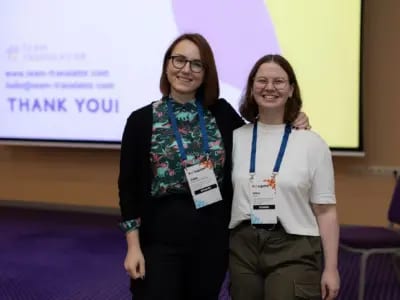
Co-founders Anikó Pető-Mordovski and Kelsey Frick in ELIA, Riga, 2026. Photo courtesy of # TeamTranslator.
Imagine an independent worker in full work, what do you think? For many of us, it's probably a person sitting on his desk or in front of a table, typing on a computer or consulting a book. Maybe they're in a coffee, concentrated in front of the customers' hustle around them. Or maybe they're in the quiet of their home, with slippers and a cup of something hot and comforting at hand.
In any case, we probably imagine translation as a solitary activity, a translator working on his own, not with others. And it is true that the life of an independent translator can become lonely. When you work for a company in-houseYou have the advantage of having colleagues, a group of people who share your experiences and circumstances. But when you are freelanceYou have to find your team somewhere else.
Since 2022, one of the places where an independent translator can find connection and support is # TeamTranslatora community in Slack consisting of more than 2100 independent workers in the translation industry. Designed to be a positive space, membership is free and join means to agree with the Community standards which, among other things, calls on members to "address frustrations with consciousness and solutions."
As an independent translator I joined # TeamTranslator a few years ago and I have benefited greatly from the exchange that takes place there. Many of Lingua's voluntary contributors also work as independent working translators, so I contacted the co-founders Anikó Pető-Mordovski and Kelsey Frick to learn more about the community.
Lingua: As professional linguists, what attracted them to translation? What keeps them in translation today?
Anikó: I loved the creativity of translation - and this is partly what keeps me in the field today, too!
Kelsey: I thought that translation was quite a practical application of my foreign language skills, so I picked it for my university degree. Little did I know I'd find it so increasingly fascinating. I love nerding out on languages, which is what keeps me in it today!
Anikó: I loved the creativity of translation, and that's part of what keeps me in this activity today too!
Kelsey: I thought translation was a practical application of my skills with foreign languages, so I chose it for my university training. I never thought I'd find her so fascinating. I love being a little manic with languages, and that keeps me here today!
Lingua: When they just entered the sector, did they have any community? In living it, what was the picture of interconnections and opportunities back then? Did you ever expect to become community creators?
Anikó: When I started working full time in the industry, I was employed at a boutique agency, so it felt a bit like living in our own bubble, in our own mini community. I only started exploring different networks and communities once I became a freelancer, mainly to feel part of a community again, get to know new people and to learn from others. It wasn't really the plan to start a community of my own - Kelsey and I started building # TeamTranslator because we felt there was a gap in the community market, so to speak.
Kelsey: My story is a lot like Anikó's. I started out working at a boutique agency that didn't really encourage community-building, but once I went freelance I really dove right into it. LinkedIn was where I first started to find both online and in-person networks and meet-ups. I was living in London at the time so there was really no shortage of opportunities. But I definitely didn't set out to become a community builder at first. With Anikó, it all happened super organically.
Anikó: When I started working full time in translation, I had a job in a small agency, so I felt it as living in my own bubble, in our own small community. I had just started exploring different networks and communities when I became an independent translator, mainly to feel part of a community again, to meet people and learn from others. I really didn't plan on starting a community of my own. Kelsey and I started building # TeamTranslator because we felt there was a space in the community market, so to speak.
Kelsey: My story is very similar to Anikó's. I had started working in a small agency that did not really encourage community building, but when I started working as an independent, I got in full. It was in LinkedIn that I started finding face-to-face and online meetings to connect and meet people. I was living in London so there were no opportunities. But I definitely never aimed at building a community at first. With Anikó, it all happened very organically.

Screenshot from the # TeamTranslator website: "A positive and inclusive group for the community of independent translators to support us."
Lingua: Tell me the story of how # TeamTranslator came up. Did you get together specifically to start a community or did you know each other long before? What was the need for a community to satisfy? Why Slack?
Anikó: We met willing for another organization, and when the idea for a supportive community for freelancers came to us, we had already known each other and worked together for about two years. We talked a lot about the state of the industry, and why so many freelancers are so frustrated with their situation. We've found that there are a lot of space online where there is room to come but felt that they won't encourage to find solutions for problems together or truly celebrating our wins. Where anyone can ask questions without judgment.
Kelsey: I think Anikó and I could really feel the frustration out there amongst the freelance translation community. There were so many Facebook groups where translators gathered to air out bad clients or express their announcement at people offering low rates. We wanted to kind of turn that on its head and ask, "How can we turn this into a positive experience?" We went through several iterations of just what we could do before we eventually landed on # TeamTranslator as a Slack group with additional resources. Slack is probably the most common professional messaging tool, and we wanted to make it as friction as possible for people to sign up and get involved. If they had to learn a whole new tool, I don't think it would've taken off as easily as it did.
Anikó: We met when we were volunteers in another organization, and when we came up with the idea of an independent support community, We knew each other and worked together for about two years. We talked a lot about the state of the item, and why many independent people were very frustrated with their situation. We realized that there were many online spaces where there is room to undrown, but we felt that they did not encourage solutions to problems as a whole or celebrate successes. Where you can ask without being judged.
Kelsey: I think Anikó and I felt the frustration in the community of independent translators. There were many Facebook groups where translators would come together to expose bad customers or express their dissatisfaction with those who offered low rates. We wanted to turn that around and ask, "How can we make this a positive experience?" We went through many versions of what we could do until we reached # TeamTranslator as a Slack group with additional resources. Slack is probably the most used professional messaging tool, and we wanted it to have as little friction as possible to get people together and involved. If you have to learn a new tool, I don't think it would have worked so well.
Lingua: Describe what a common day is like as administrators of the # TeamTranslator community. How's the team behind? Are you all volunteers? What is the balance between nurturing the community with purpose and allowing things to arise in an organic way?
Anikó: It really varies day-by-day, there is no typical day or week at # TeamTranslator! Our HQ, as we call it, is just me and Kelsey. We have a weekly meeting to discuss our plans and ideas for the community, and then we each spend a few hours every week to tick some to-two off the list. We're usually texting or sending voice notes to each other nearly every day.
We also keep an eye on the Slack conversations and step in if needed. In such a large community as # TeamTranslator, we couldn't do this without help. We have an amazing five-person moderation team that's become invaluable.
All seven of us are working as volunteers, dedicating our own free time to the community.
Although there is room for organic development, we are quite practicable in a way when it comes to improving on how the community works. What I mean is that we don't have a five-year plan or some great goals set but we do try to keep everything together and organized. Before introducing something new or making a change, we always ask ourselves: is this supporting # TeamTranslator's mission? Is it in line with the ethos of our community?
When we launched # TeamTranslator in 2022, we set up some thematic channels to help steer the talks. We also have semi-regular, informal discussions we call # TTTeas that always centre around topics that are important and hopefully interested to freelance Translators. We hold online co-working sessions twice a week, and recently launched our expert-led webinars.
Overall, we always encourage feedback from our members - we've just very recently added a new channel, # skill-swap, to our list based on a member suggestion. If we have a new idea, we don't just abandon it because it's not part of the "original plan."
So maybe purtensively organic is the best way to put this!
Anikó: Depends on day to day, there is no typical day or week in # TeamTranslator! Our leaders are Kelsey and I. We have a weekly meeting at which we discuss our plans and ideas for the community, and then we spend several hours each week crossing tasks from our lists of earrings. We usually send us text messages or audios almost every day.
We also review the talks in Slack and get involved if necessary. In a community as big as # TeamTranslator, we couldn't do it without help. We have a team of five-person moderators that is invaluable to us.
The seven of us work as volunteers, we dedicate our free time to the community.
Although there is room for organic development, we are quite determined in terms of improving the functioning of the community. What I mean is that we do not have a five-year plan or major defined objectives, but we do try to support everything in an organized way. Before we present something new or make a change, we always wonder: is this functional to # TeamTranslator's mission? Do you agree with our community's ethics?
When we started with # TeamTranslator in 2022, we created some thematic channels to help channel the talks. We also have frequent and informal discussions we call # TTTTeas that always cover important and, hopefully, interesting issues for independent translators. We have shared work sessions twice a week, and we recently launched our web seminars made by experts.
In general, we always encourage the comments of our members. We recently added a new channel to our list, # skill-swap, from a member's suggestion. If we have a new idea, we don't just abandon it because it's not part of the "original plan."
So maybe organically with purpose is the best way to describe it!
Lingua: Give us an example of the dynamics of the # TeamTranslator community. Have you seen unexpected friends or professional collaborations that have emerged through the community? How do they promote collaboration rather than competition, and give rather than just receive?
Kelsey: We've honestly been really lucky, and I think that's in large part due to the work we did pre-launch to make it super clear what the goal of the group was. The community really bought into the idea that this is a positive and supportive space. Of course, like Anikó said, we do have the step in and moderate sometimes, but I think the fact that we have over 2,100 members means that we'd created the kind of group that people desperately wanted within the industry.
And there's been so many wild and wonderful connections happening because of the community. We regularly see members posting photos of them meeting up in real life when someone's visiting a new city. I've even had someone I'd never met before stay in my flat for a few days before they went off hiking in the Scottish Highlands!
We also have other groups forming, like someone who's currently putting together a creative writing group specifically for Translators. Accountability groups have sprung up here and there. People recommending and tagging each other for jobs. I genuinely think that everyone just wants to help where they can and is happy to see others succeeded.
And, of course, we have entire channels dedicated to the heights and lows of freelancing. # winners-circle for when something awe has happened and you want some collections to celebrate with, and # let-it-out for those times you just need a little support. It's amazing because we often see people who'd originally posted on # let-it-out come back with a # winners- circle update thanks to the advice they were given.
Kelsey: Honestly, we have been very lucky, and I think that's largely because of the work we did before we started with the community to make it very clear what the group's goal was. The community really accepted the idea that this is a positive and supportive space. Of course, as Anikó said, sometimes we get involved and moderate, but I think the fact that we have more than 2100 members means we create the kind of group that people desperately wanted in our cascade.
And there were also many incredible connections in the community. We see members who publish photos of him often gather in real life when someone visits a new city. Even someone I didn't know stayed in my apartment a few days before you went on a trip to the Highlands of Scotland!
We also have other groups in formation, for example, someone who is creating a creative writing group for translators. Some responsibility groups emerged. There are people who recommend and label others in jobs. I generally believe that everyone wants to help in what they can and are happy with others' successes.
And, of course, we have whole channels dedicated to the high and low of independent work. Like # winners- circle for when something amazing happens and you want to celebrate it with your colleagues, and # let-it@-@ out for those moments when you need support. It's amazing because we usually see people who published in # let-it-out first and then came back with an update in # winner-circle thanks to the advice they received.
Lingua: They made a great effort to guide the # TeamTranslator community, giving them their time and energy. What do they receive in return, at the personal and professional levels? What has been your favorite moment or experience in the life of this community?
Anikó: On a personal level, it's absolutely a wonderful feeling that we can provide a platform for our fellow freelancers to talk about the things that matter in a productive way, that we can contribute a little to making the industry a bit better. And also, # TeamTranslator is a great creative outlet. I love coming up with new initiatives, refining rough ideas together, brainstorming with Kelsey.
On a professional level, it's great to read everyone's suggestions and tips! Even if I don't participate in many of the conversations that happen on Slack, I do read them and learn a lot.
My favorite moment? I didn't tell you when exactly it happened, but I remember the feeling when we first learned that a # TeamTranslator member recommended the community to a collect at a conference we didn't even attend! Some how it was so surreal that people were talking about # TeamTranslator when we wouldn't in the room - like our little baby of a community grow up and started living its own life!
Kelsey: # TeamTranslator is for sure a passage project. I don't think that Anikó or I would be half as willing to give the time and energy we do to it if we didn't believe that it was doing good in the industry. I also think that, on some level, Anikó and I weren't ready to stop working together. When you find something you click with like that, especially as a freelancer, you hold on to them.
I also won't lie and say that being the co-foot of a community like this don't have its perks! It's really, really nice when people take the time to thank us for # TT, and I think that it's garnered a lot of good will from the industry as a whole. We're also regularly invited to give our thoughts in cool spaces like this and people want to hear what we have to say. By virtue of founding # TT, we've become authorities in the industry, and we definitely don't take that for granted.
In terms of my favorite moment, it's probably a tie. It's either those wild first three days after we launched where over 250 people joined, or when # TeamTranslator won women-Led Community of the Year at the Digital Women Awards. Both were such "pinch me" moments, like, "Wow, we're really doing this, huh?"
Anikó: At the personal level, it is an incredible feeling that we can provide a platform for our independent colleagues to talk about things that matter to us in a productive way, that we can help make the profession a little better. And also, # TeamTranslator is a great creative escape. I love to think of new initiatives, refine our ideas together and exchange ideas with Kelsey.
At the professional level, it's great to read everyone's suggestions and advice! Although I do not participate in many of the conversations that take place in Slack, I do read them and learn a lot.
My favorite moment? I couldn't tell you exactly when it happened, but I remember how I felt when a member of # TeamTranslator recommended the community to a colleague at a conference we didn't even attend. It was surreal in a way that people were talking about # TeamTranslator when we were not present, as if our baby community had grown up and was living their own life!
Kelsey: # TeamTranslator is totally a passion project. I don't think Anikó or I would have had half the will to offer our time and energy to do it if we didn't think he was doing the sector a good job. I also think that, on some level, Anikó and I were not ready to stop working together. When you find someone you connect with like this, especially as an independent professional, you hold on to that person.
Nor will I lie and say that being the co-founder of a community like this has no benefits! It's very nice when people take the time to thank us, and I think that brought us a lot of good will from the whole point. They also regularly invite us to give our perspectives in interesting spaces like this and people want to hear what we have to say. Thanks to having founded # TeamTranslator we have become industry references, and we certainly do not take it for granted.
As for my favorite moment, it's probably a tie. It may be those first three wild days after having presented the community in which 250 people joined, or when # TeamTranslator won the Community led by Women of the Year at the Digital Women's Awards. They were both moments of "pinching me," like, "geez, we're really doing this, aren't we?"
Lingua: It is a particularly complicated time to be a translator, given the continuous disruptions that the IA brought into the sector. From the strategic position of the # TeamTranslator community, how do you see these disruptions? What role does the community play to help independent translators cope with the storm?
Anikó: The surfing thing is that we don't actually get THAT many conversations specifically about AI. But perhaps not surprisingly, when AI is mentioned, it's usually brought up in a negative way. As I see it, professional Translators are not necessarily fused by AI as a new tool but how much it's oversold to clients while more often than not it survivors. In many cases translate feel it's forced on them without any gain in quality or productivity.
Of course, a community like # TeamTranslator cannot solve these kinds of issues on its own, however, it can provide a great place to share worrying thoughts to light the stress, to feel some restraint that we are not alone with these issues, and just as importantly, to exchange ideas on how to set boundaries when it comes to AI.
Anikó: The most surprising thing is that we do not have TANTAS specific conversations about IA. But maybe it's no surprise that when you mention IA, usually negative. As I see it, professional translators are not necessarily frustrated by IA as a new tool, but by how it was sold over to customers when they are generally not up to it. In many cases, translators feel they force them to deal with IA without winning in quality or productivity.
Of course, a community like # TeamTranslator cannot solve these problems alone, however, can be a good place to express worrying thoughts to relieve stress, feel certain camaraderie, which we are not alone with these problems, and, equally important, exchange ideas on how to set limits on the use of the IA.
Lingua: These days, the IA as a theme tends to take all the air from a room, but there are many other problems facing independent translators. Again, from the point of view of the # TeamTranslator community, what are important issues for members besides the IA?
Kelsey: I think the cost-of-living crisis has hit everyone, so our members are even more wary about where they spend their money. We see a lot of discussions on what the best tools are, the best conferences, the best CPD, etc. Using # TeamTranslator as it was designed - a shared pool of knowledge - is a fantastic resource for a lot of people.
And because of the cost of living and AI, lots of people are trying to focus on "future-proofing" their careers. I don't know how much I like that word, personally, but I do think that as freelancers we always need to be learning. We like to be a space where people can do that.
Other than that, I'd say we're looking at your standard freelancer works: how to avoid difficult clients, where's the best place to find job opportunities, using our time and energy effectively when we're marketing, etc. There's nothing necessary revolutionary happening in # TeamTranslator, and I think that's exactly what's great about it. It's just a bunch of people offering advice and support through those very real freelance experiences.
Kelsey: I think the cost-of-living crisis hit everyone, so our members are just as worried and attentive where they spend their money. We see a lot of discussion about what are the best tools, the best conferences, the best data center, etc. Using # TeamTranslator as designed - a shared knowledge fund - is a fantastic resource for many people.
And because of the cost of living and the IA, many are focusing on doing their "future-proof" careers. I don't know how much I like that word personally, but I think as independent we always have to be learning. We want to be a space where you can do that.
Beyond that, I think we are facing the normal concerns of an independent professional: how to deal with difficult customers, what is the best place to find work opportunities, how to use our time and energy effectively when we promote ourselves, etc. Nothing necessarily revolutionary happens in # TeamTranslator, and I think that's exactly the great thing about this. Very few people offer advice and support through very real independent experiences.
Lingua: What do you think awaits the future of the # TeamTranslator community? Any interesting plans?
Anikó: We're always full of ideas, all I can say is "watch this space"!
Kelsey: AgReed. Even if we told you the big plans, they'll probably look a lot different six months from now!
AnikóWe're always full of ideas! All I can say is, "be careful of this space."
Kelsey- I agree. Even if we told you the plans, they're probably very different in six months!