Online or face-to-face protests, what effectiveness do they have?
Originally published in Global Voices in Spanish

Image of Gerd Altmann in Pixabay. Used under Pixabay license.
This article is part of the September 2026 Global Voices Spotlight series, "Protest in democracy. "With this series, we seek to explore the various forms of protest, the tactics that States use to de-legitimize and eliminate them, and the complex relationship between protest and democracy. You can support this coverage with a donationHere..
The growing popularity and widespread use of social networks have influenced how people express themselves. If earlier the protests were to go out on the street with banners and slogans, today these activities can also be carried out in virtual space. Messages and slogans are transmitted through labels, digital posters or videos published on different platforms. Events like Arab Spring and Occupy movement have further strengthened the phenomenon of online protest.
They're both effective, right?
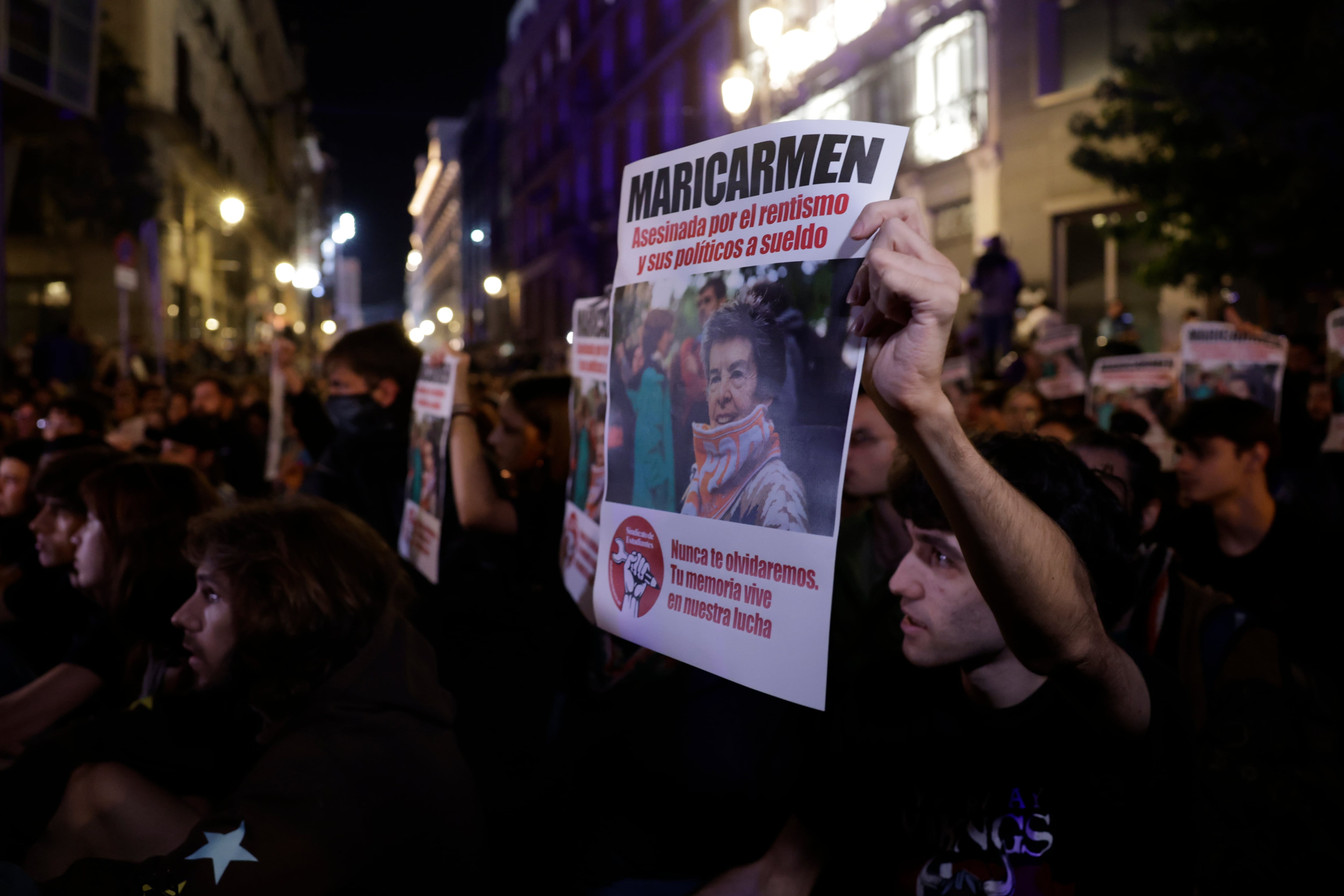
What's the difference between online and face-to-face protests? According to the anthropologist Yatun Sastramidjaja, in a article for the University of Amsterdamthere is no significant difference between face-to-face and virtual protest, except for the stage: the real world in front of the digital world. Despite this difference, both forms can mobilize crowds, express opinions and support each other. A protest that begins online can spread to the streets, as was the case with the Arab Spring and the Occupy movement. These online mobilizations also serve to raise awareness of specific problems, and then give rise to face-to-face protests.
These online movements are attractive because they are connected with the modern cultural trendssuch as memes, labels, posters and online applications. The campaigns well done usually hire specialized graphic designers to choose specific colors and typographs that transmit a significant background, are carefully thought according to the nature of the protest. These visual elements are then systematically applied on all digital platforms, including websites, social networks, posters and other media. In essence, protest is almost treated as a product brand, as it requires a clear and strong identity.
This perspective is very effective to install a social movement in people's minds, as it comes to those who are used to participating in protests and those who are attracted to the issues raised or to the image created by the organizers. It also proves to be useful in various demographic sectors with different forms of expression. These online protests have managed to mobilize a wide range of groups, including K-Pop fans from around the world.
The K-Pop, especially its community of followers, is a clear example of a youth culture that has influence in various areas. In Korea, he played an important role in the President Yoon dismissed, while in other countries, like Indonesia, K-Pop fans have actively participated in protests on issues social and political rights. Interactions among the followers usually occur online (on platforms such as X, Facebook and TikTok); therefore, movements often start as virtual protests and then some people go out on the streets along with the other protesters.
However, there are also disadvantages.
Although digital protest gains popularity, especially among young people, it also has several disadvantages. One is inequality in Internet access.
The book of Merlyna Lim, Social and political media in Southeast Asia, notes that the first studies on digital platforms acclaimed them as a new space for democratic processes, as they could cross borders, and at the same time promote participation and social movements. However, today, the distribution of digital technology is uneven; therefore, while it can cross borders, the people involved continue to have especially those who already have good access to technology. Lim states:
I contain that, setting aside the issue of unequal access, digital networks are not egalitarian networks where citizens have equal opportunities to participate in public discourse. First and foremost, the Internet is never inherently egalitarian. Instead, the structure of the Internet exhibits the characteristics of a scale-free network - a network in which the degree distribution follows a power law.
I maintain that, aside from the issue of unequal access, digital platforms are not equal spaces where citizens have equal opportunities to participate in public debate. First of all, the Internet is never equal by nature. On the other hand, the Internet structure shows the characteristics of a non-scale network, a network in which the distribution of degrees follows a law of powers.
This unequal distribution of connectivity will make it difficult for society organizations to recruit new members from sectors other than their current base. In addition, echo cameras are aggravated by Internet algorithms that suggest topics according to the interests of each user, which generates a restrictive environment. For example, if you are interested in environmental activism, your inbox will be filled with suggestions on similar issues and you are likely to not see other calls that can also attract you, as the algorithm detected your interest in environmental activism.
Another cause for concern is the presumption that those involved in virtual protests are not necessarily willing to go out on the streets or maintain a constant commitment to the causes raised. Many participate in digital activism because, in addition to ease (such as posting memes or online posters), they can also take refuge in anonymity. This is different from going out on the street, which carries a higher risk of clashes with the security forces. In view of this, the Fundación Open Society(OSF) claims that online protests attract young people who are first involved in social affairs, and that this is the first step towards face-to-face activism.
It is undeniable that there are various failures, but in this brief article, OSF suggests that civil society organizations can develop long-term strategies by incorporating online movements to defend specific causes. This involves planning digital participation and presence, as well as facilitating a smooth transition between the two. In essence, civil society organizations must devise ways to maintain the public interest so that those who are initially involved online remain committed to the long-term cause and are willing to join in face-to-face activities.
In order to address the disparity in Internet access, civil society organizations should continue to conduct face-to-face educational workshops and discussions that reach people with poor Internet connection. Ultimately, although access remains uneven, both online and face activism can contribute significantly to a movement and complement each other.