The only daughters of the country became exactly what they were educated for
Originally published in Global Voices in Spanish

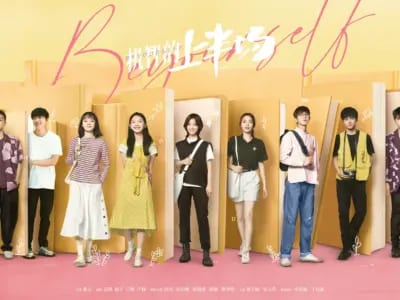
Poster of the popular Chinese dramatic series Be yourselfThe report tells the story of four independent women growing up in contemporary China. Image taken from the official Weibo account. legitimate use.
Grace responded to the phone at 22: 30 Beijing time after another 12-hour working day.
"I can't depend on anyone else," he said.
His words could well be a phrase of Be yourself, popular Chinese dramatic series about four young people who face employment, relationships and adult life according to their own convictions. In recent years, independent women's stories have become increasingly prominent in Chinese popular culture and have connected with a generation of women whose lives have been marked by increased access to education, professional opportunities and the possibility of moving from one place to another.
A week later, Scarlett was sitting in the living room of a Manhattan place while he had a hot fruit tea. He had left a job in the Hong Kong financial sector for postgraduate studies in New York and described independence in another way.
- I can leave anytime.
Another woman I interviewed, Iris, was in Hawaii making time until she started her new job.
All three belong to the Chinese generation of the only child. Each is an only child. They all grew up in families that had allocated great resources to their education and that attached great importance to efforts and achievements. Although their lives are different, they share an inheritance: they were educated to see themselves as the main ones responsible for writing their own history.
Their experiences reveal a fundamental contradiction in China's demographic debate.
The decline in the Chinese fertility rate is often explained as a result of economic pressures, a change in attitude towards marriage or an increase in the costs of raising children. But these explanations leave aside a deeper transformation. The women that China now expects them to get married before and have more children are the same as those who for decades encouraged to study, achieve success and be independent. His life options expanded far beyond traditional expectations.
In no other area is this contradiction as evident as between the unique daughters of China.
For decades, China's modernization project was based on the expansion of opportunities. During policy of the single child (1979- 2015), the parents of many families in Chinese cities allocated great resources to the education of their daughters, to extracurricular activities and to their academic training. Many encouraged them to aspire to a future more likely than previous generations of women.
According to conventional parameters, the project was successful.
Today, women represent more than half of the university students from China and have entered elite professions in an unprecedented proportion. For years, this transformation was celebrated as a sample of social progress.
But this success has also generated an unexpected dilemma.
Increasingly, the same qualities that were previously promoted as virtues - ambition, education, independence and mobility - are more considered obstacles to marriage and motherhood. The language used to talk about the status of women has also changed. Women are increasingly evaluated, not as students, professionals or individuals, but as demographic agents of those who are expected to contribute to resolving the fertility crisis.
The women I spoke to rarely describe their decisions in ideological terms. They speak of autonomy, of a work that makes sense and of their refusal to organize their whole life in accordance with the expectations of others.
In their accounts, independence takes different forms. For Grace, it is linked to an intense workload; for Scarlett, security comes from economic flexibility; for Iris, mobility and uncertainty are part of what makes sense to his life.
Iris's story helps to understand how he developed that need to make his own decisions.
His childhood was full of piano classes, swimming and training programs aimed at expanding his chances for the future. Years later, he began to interpret those investments differently. His mother had not just paid for learning certain skills. He had invested in his ability to take advantage of opportunities where they arose.
Like many Chinese urban parents during the years of rapid economic growth in the country, Iris's mother believed that it was possible to build a future with more possibilities through planning, education and effort. Studying abroad, achieving professional success and being able to move to other places were not distant dreams, but goals for which it was worth working.
However, when these opportunities were realized, many parents began to have doubts. The same families who had encouraged their daughters to explore the world expected them to return home sooner or later, marry at the age they considered appropriate and form a family.
In other words, many unique daughters did what was expected of them. They followed the path their families had drawn. The contradiction is that this path led them far beyond what their parents - and perhaps also the State itself - had imagined.
Discussions on the decline in fertility in China often ignore a fundamental issue: to what extent women have assumed that they have the right to decide on their own lives. Education not only expanded its opportunities. It also allowed them to imagine other forms of life and turned marriage and motherhood, which were previously taken for granted, into decisions that they could make for themselves, within the framework of their reproductive rights. One recent research from the University of Hong Kong on the attitudes of Chinese women towards marriage and motherhood points to a deeper transformation: marriage is no longer necessarily considered a requirement for a woman to form a family.
For decades a tacit agreement seemed possible: daughters would receive an education and possibilities that previous generations of women had not had, and over time marriage and family responsibilities would come.
But that process transformed women much more than many had anticipated.
The women I interviewed do not reject marriage or motherhood. Most still consider getting married and having children. What they reject is the idea that such decisions must necessarily be above any other aspiration.
China's unique daughters did not reject the future offered to them.
They made it come true.
The country's fertility crisis may be one of the clearest signs that this modernization project was successful.