Advertisement
Advertisement

Topic

their

Health

Scientists use sound waves to deliver a new attack on deadly brain cancer

Scientists at the University of Virginia have developed a promising new strategy to fight glioblastoma, one of the deadliest and most difficult-to-treat forms of brain cancer. Their experimental approach combines focused ultrasound, tiny nanoparticles, and genetic molecules called microRNAs to attack multiple cancer-driving genes simultaneously.

Science

Einstein's equations may explain the universe without dark energy

Mathematicians have uncovered what they argue is a fundamental flaw in the standard model of the universe, potentially challenging the need for dark energy. Their calculations suggest that the mathematical framework used to describe cosmic expansion is inherently unstable and that the universe could accelerate naturally under Einstein's original theory of gravity. The findings also raise surprising questions about whether our location in the universe is as ordinary as scientists have long assumed.

Advertisement
World

Kenya's female athletes make their mark as Youth Olympic Games approach

Senegal is preparing to host the Youth Olympic Games, which begin this weekend. The young athletes who hope to showcase their talents on the international stage have their sights set on the Games, and Kenya has made sure that its young boxers remain on their toes and are ready to take on opponents of a higher calibre. FRANCE 24's Bastien Renouil reports from the ground.

Science

Scientists overcome a hidden obstacle to more powerful quantum computers

Scientists have discovered a way to operate multiple silicon qubits simultaneously with remarkable accuracy, overcoming a major challenge in scaling up quantum computers. Their new technique maintained accuracy of approximately 99.9% even when all five qubits were running at once, opening the door to larger and more powerful quantum processors.

Science

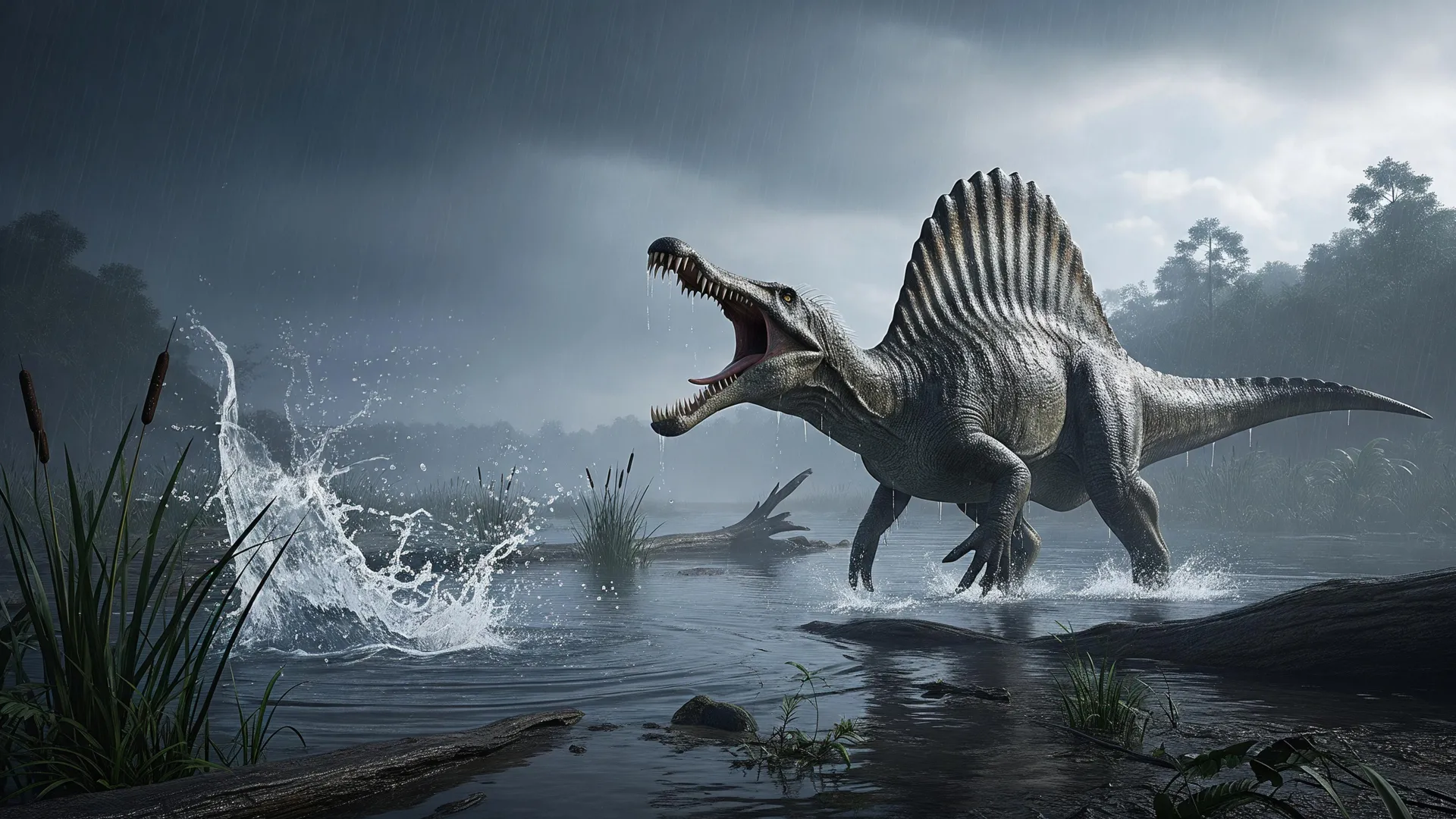
New evidence suggests spinosaurus spent most of its life underwater

Millions of years after animals first conquered land, some took an extraordinary evolutionary U-turn and returned to the water. Using machine learning and thousands of fossil measurements, Yale scientists have uncovered surprising clues about which prehistoric creatures truly became aquatic. Their findings suggest that Spinosaurus spent most of its life underwater, while some ancient marine reptiles previously thought to be fully aquatic actually spent considerable time on land.

Science

A tiny defect in a crystal reveals a big quantum surprise

Researchers have solved a long-standing challenge in understanding how tiny defects in materials like diamond and silicon carbide behave when exposed to light. Their new computational method revealed a surprisingly important energy-loss mechanism in silicon carbide that scientists had previously underestimated. The finding helps explain a mystery that has puzzled researchers for years and could improve the design of quantum computers and sensors.

Advertisement
Topic: their | RocksNews