#EndSARS became more than a protest against police brutality. It became an entry point into political consciousness.
Originally published on Global Voices

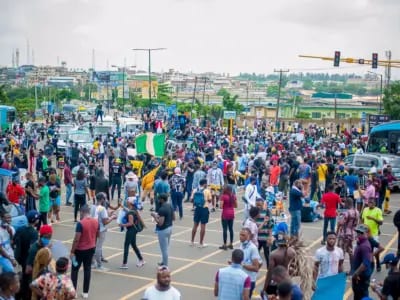
Protesters at the endSARS protest in Lagos, Nigeria. Image by Kaizenify via Wikimedia Commons. License: CC BY-SA 4.0.
This post by Cali-Dibang Nshua is part of Global Voices’ September 2026 Spotlight series, “Protest in Democracy.” With this Spotlight, we seek to explore the many forms of protest, the tactics states use to delegitimize and suppress them, and the complex relationship between protest and democracy. You can support this coverage by donating here.
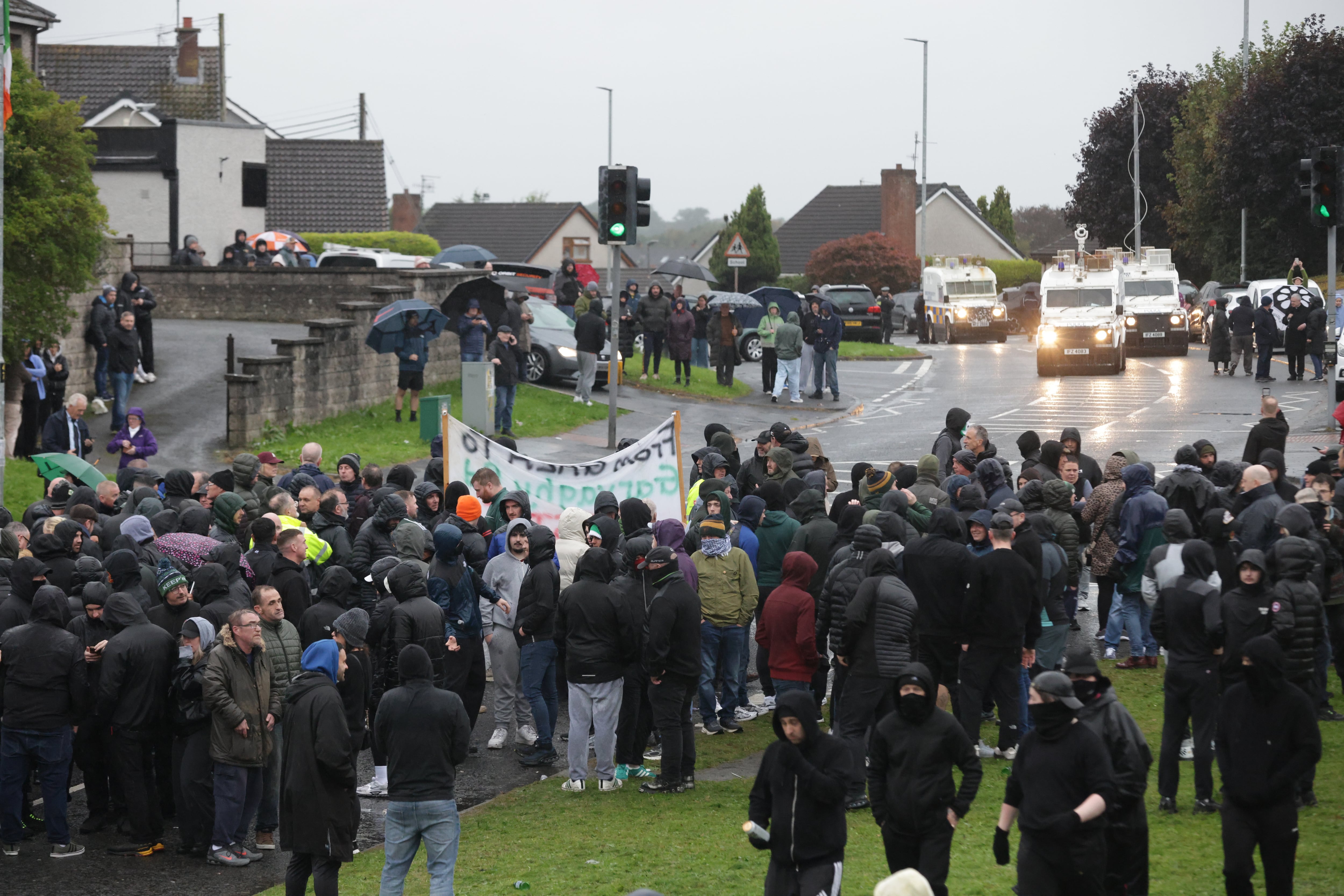
In October 2020, thousands of young Nigerians took to the streets demanding an end to police brutality.
What began as a campaign against the Special Anti-Robbery Squad (SARS) quickly became something much bigger. Young Nigerians were not only demanding an end to police abuse; they were expressing years of frustration with unemployment, insecurity, poor governance, economic hardship, and exclusion from political decision-making.
For a generation that had often been described as politically disengaged, #EndSARS became a moment of awakening.
But six years later, its legacy is complicated.
The protests strengthened the political consciousness of some young Nigerians and encouraged greater participation in elections, governance, and activism. For others, the experience produced fear, distrust, and disillusionment. Some began looking beyond Nigeria for opportunities and a future they felt they could not build at home.
The same movement that told young Nigerians, “You need to participate,” may have left others thinking, “I need to leave.”
As Nigeria approaches another general election in 2027, the question is no longer simply what happened during #EndSARS. It is: What did #EndSARS leave behind?
The moment a generation found its voice
Before #EndSARS, Nigerian youth were often characterized by low participation in formal politics. Young people were encouraged to vote, but many remained distant from political parties and institutions. The protests disrupted this narrative.
Through social media and physical mobilization, young Nigerians demonstrated an ability to organize outside traditional political structures. They raised funds, coordinated medical assistance, shared information and created networks that extended beyond Nigeria.
The movement also demonstrated the political power of digital spaces. Social media allowed young people to document police abuses and communicate with one another without relying entirely on traditional media or political organizations.
For many participants, the experience changed their understanding of citizenship. They were no longer simply people watching Nigerian politics from the sidelines, but active participants.
In a 2025 study of 400 respondents, political scientist Solomon Temitope Omotayo examined the relationship between the EndSARS protests and youth political participation. His research found a statistically significant positive relationship between participation in the protests and subsequent political engagement. More than half of respondents reported increased engagement with elections and governance after the protests.
Omotayo’s findings suggest that, for many young Nigerians, #EndSARS became more than a protest against police brutality. It became an entry point into political consciousness.
A more recent study by Toyin Segun Onayinka, Omolola Oluwasola, and Obasanjo Joseph Oyedele takes this argument further. Their 2026 research examines EndSARS and the later “Obidient” movement as forms of mediated political activism.
The researchers found significant relationships between social media activism and young people’s intentions to vote and contest for political office.
Yet their findings contain an important contradiction: Greater political mobilization did not automatically translate into political power.
Greater political mobilization does not guarantee political change
The activism examined in the study did not alter the outcome of the 2023 presidential election. This distinction matters.
A movement can change how a generation understands politics even when it doesn’t immediately change who holds political power or how political institutions operate.
Furthermore, the violence surrounding the demonstrations, particularly the events at the 2020 Lekki Shooting, became a defining memory for many participants. Many young Nigerians believed that protesting was a legitimate way to demand change in a democracy. But their experience during the #EndSARS protest and after made them realize that using that democratic right could have serious consequences for them personally.
Research by Khadijah Sanusi Gumbi and Yahaya T. Baba found evidence of political trust deficits surrounding the #EndSARS protests, particularly around government accountability, transparency and police conduct. Olatunde Olayinka Ayinde, Oluwasemiloore Peace Atere, Ugonna Ibeawuchi, and their colleagues also found elevated levels of psychological distress, depression, anxiety and PTSD among protesters compared with non-protesters.
The same experience that pushed some young protesters deeper into politics left others questioning whether the political system could ever truly change.
For some, it became a reason to stay engaged through organizing, voting, or considering running for office.
Others became disillusioned. Disappointment, uncertainty, and frustration led some to step back from politics, while others began to consider a different response: leaving Nigeria altogether.
The result is a generation responding to the same defining moment in very different ways.
From protest to “Japa”
The years following #EndSARS also coincided with the growing prominence of “Japa,” a Yoruba expression meaning to run or flee that has become widely associated with leaving Nigeria, particularly among young people seeking better opportunities elsewhere.
It would be too simplistic to say that #EndSARS caused Nigerian youth to migrate.
Migration decisions are shaped by many factors: unemployment, inflation, insecurity, education, poor infrastructure, limited opportunities, and the desire for a better quality of life.
But the experience of #EndSARS can form part of the larger story of how some young Nigerians came to view their future.
Anthropologist Jing Jing Liu, in her research on the Japa phenomenon, interviewed Nigerian youths about their experiences of migration. Her work suggests that leaving Nigeria is not always understood simply as an economic calculation. For some people, migration is described in terms of escape and survival.
In her 2024 study, middle-class youth fleeing Nigeria: rethinking African survival migration through the Japa phenomenon, Liu interviewed 21 Nigerian youths aged 20 to 35 and examined the urgency surrounding their decisions to leave.
Her research shows that economic deterioration, prolonged uncertainty, and frustration with Nigeria’s trajectory can create a feeling that leaving is necessary rather than optional.
In another piece, “Japa, or to flee or to run: Nigerian youth and the urgency of departure,” Liu explores the meaning behind the language itself. The use of “Japa” captures something stronger than simply moving from one country to another. It can express an urgency to escape circumstances that young people feel they can no longer tolerate.
Other researchers, Faith Adeyanju, Bukola Alao, Oyedamade Opakunbi, and Toluwalase Ajibade , similarly examined “Japa” as a survival strategy. Their research identifies unemployment, insecurity, unfulfilled aspirations, and weak economic development among the factors pushing Nigerian youths toward migration.
These studies demonstrate why young Nigerians leave. They do not establish that #EndSARS directly caused their migration.
That relationship deserves further investigation through the stories of the people themselves.
Perhaps the most fascinating legacy of #EndSARS is that young Nigerians did not respond to the experience in the same way.
One young person may have emerged from the protests thinking: “I have to become more involved in politics.”
Another may have concluded: “I cannot build my future here.”
And some did both: leaving Nigeria while continuing to engage with its politics from abroad. This complicates the idea that migration necessarily means political disengagement. A Nigerian can leave the country without leaving the conversation.
Six years on, #EndSARS remains more than a protest remembered for what happened in 2020. It changed how many young Nigerians understood citizenship, collective action and their relationship with power. While it did not resolve the problems that brought people to the streets, it left behind a generation more willing to question, organize, and demand accountability.