Advertisement
Advertisement

Health

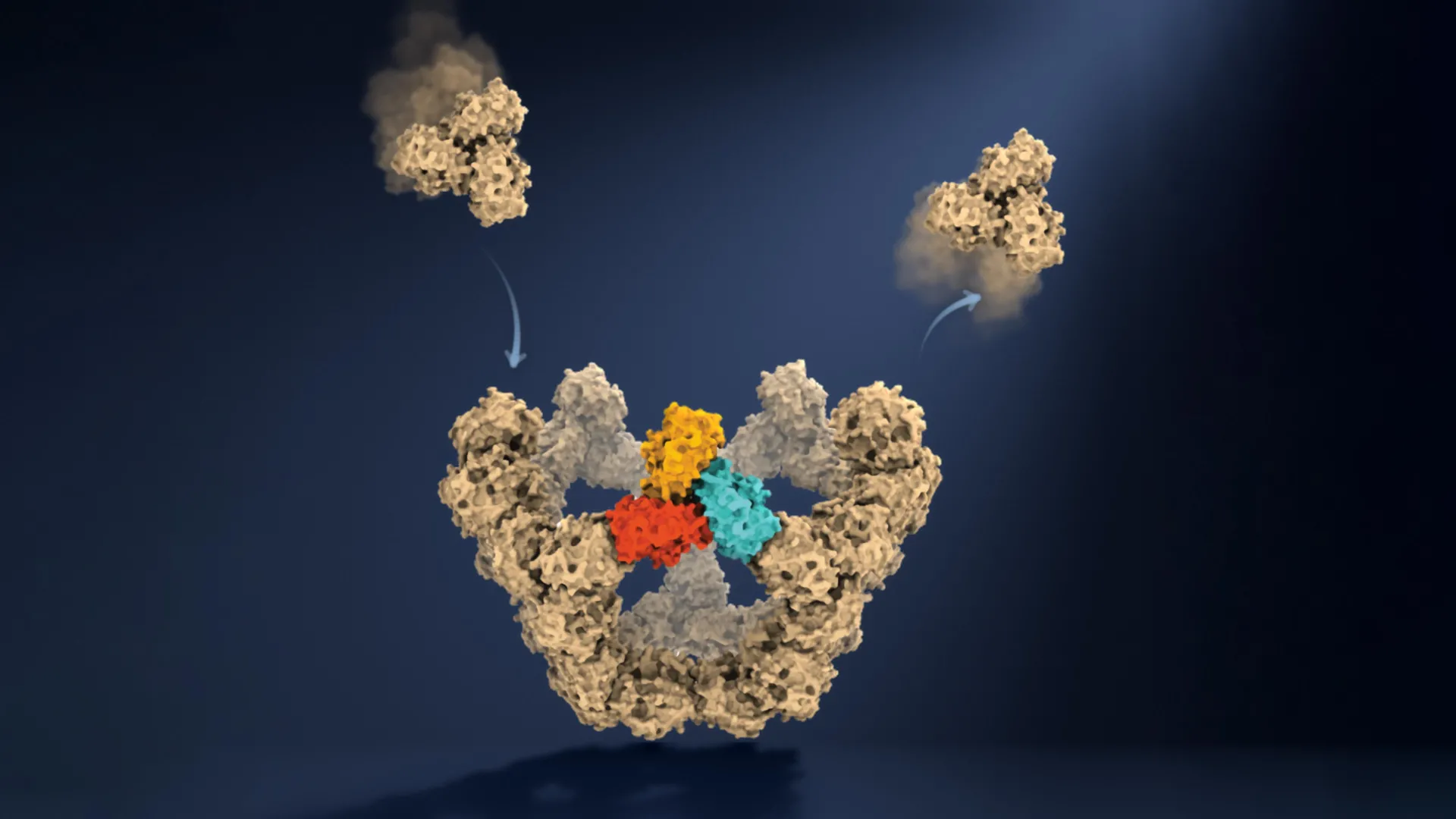
Oxford scientists discover how viruses build themselves without a blueprint

Scientists have captured virus-like particles assembling themselves step by step, revealing how a surprisingly simple process of trial and error produces complex structures with remarkable precision. The discovery uncovers a crucial molecular turning point that speeds up assembly and could lead to new ways to disrupt viruses and develop vaccines.

Advertisement

WHO: access to HIV medicines severely impacted by COVID-19 as AIDS response stalls

Seventy-three countries have warned that they are at risk of stock-outs of antiretroviral (ARV) medicines as a result of the COVID-19 pandemic, according to a new WHO survey conducted ahead of the International AIDS Society’s biannual conference. Twenty-four countries reported having either a critically low stock of ARVs or disruptions in the supply of these life-saving medicines. The survey follows a modelling exercise convened by WHO and UNAIDS in May which forecasted that a six-month disruption in access to ARVs could lead to a doubling in AIDS-related deaths in sub-Saharan Africa in 2020 a

WHO experts to travel to China

WHO experts will travel to China to work together with their Chinese counterparts to prepare scientific plans for identifying the zoonotic source of the SARS-COV-2 virus. The experts will develop the scope and TOR for a WHO-led international mission. Identifying the origin of emerging viral disease has proven complex in past epidemics in different countries. A well planned series of scientific researches will advance the understanding of animal reservoirs and the route of transmission to humans. The process is an evolving endeavor which may lead to further international scientific research and

UN Public Service Day

Honouring the public servants who have been working on the frontlines of the COVID-19 pandemic. Whether working in healthcare or delivering essential services in the areas of sanitation, social welfare, education, postal delivery, transport, law enforcement, and more, public servants globally have continued to work in the community as many people shelter at home, risking their lives to ensure ours can continue. WHO Director-General joined a virtual high-level panel at the United Nations to mark Public Service Day on 23 June to honour the women and men who are risking their lives and health to

Independent evaluation of global COVID-19 response announced

PWHO Director-General today announced the initiation of the Independent Panel for Pandemic Preparedness and Response (IPPPR) to evaluate the world’s response to the COVID-19 pandemic. In remarks to WHO Member States, Director-General Tedros Adhanom Ghebreyesus said the Panel will be co-chaired by former Prime Minister of New Zealand Helen Clark and former President of Liberia Ellen Johnson Sirleaf. Prime Minister Clark went to on lead the United Nations Development Programme and President Sirleaf is a recipient of the Nobel Peace Prize. Operating independently, they will choose other Panel mem

As more go hungry and malnutrition persists, achieving Zero Hunger by 2030 in doubt, UN report warns

Rome – More people are going hungry, an annual study by the United Nations has found. Tens of millions have joined the ranks of the chronically undernourished over the past five years, and countries around the world continue to struggle with multiple forms of malnutrition. The latest edition of the State of Food Security and Nutrition in the World, published today, estimates that almost 690 million people went hungry in 2019 – up by 10 million from 2018, and by nearly 60 million in five years. High costs and low affordability also mean billions cannot eat healthily or nutritiously. The hungry

More than 150 countries engaged in COVID-19 vaccine global access facility

Seventy-five countries submit expressions of interest to COVAX Facility, joining up to 90 further countries which could be supported by the COVAX Advance Market Commitment (AMC) The COVAX Facility, and the AMC within it, is designed to guarantee rapid, fair and equitable access to COVID-19 vaccines for every country in the world, rich and poor, to make rapid progress towards slowing the pandemic Interest from governments representing more than 60% of the world’s population offers ‘tremendous vote of confidence’ in the effort to ensure truly global access to COVID-19 vaccines, once developed Ge

WHO Director-General pays tribute to Spain’s sacrifices and leadership to confront COVID-19

World Health Organization Director-General Dr Tedros Adhanom Ghebreyesus today joined the leadership of Spain, paying homage to those who have lost their lives in the country due to COVID-19, saluting the heroic efforts of heath workers and praising the government’s resolute and robust response to reverse the virus’s transmission. “It is with great respect that I join the King of Spain, the Prime Minister and the entire government of the country to pay tribute to the people who have fallen victim to COVID-19,” said Dr Tedros. “I extend my deepest condolences to the families of all people who h

Advertisement

New COVID-19 Law Lab to provide vital legal information and support for the global COVID-19 response

Launching today, the COVID-19 Law Lab initiative gathers and shares legal documents from over 190 countries across the world to help states establish and implement strong legal frameworks to manage the pandemic. The goal is to ensure that laws protect the health and wellbeing of individuals and communities and that they adhere to international human rights standards. The new Lab (at www.COVIDLawLab.org) is a joint project of United Nations Development Programme (UNDP), the World Health Organization (WHO), the Joint United Nations Programme on HIV/AIDS (UNAIDS) and the O’Neill Institute for Nat

Massive study of 460,000 people challenges ultra-processed food cancer fears

A massive study of more than 460,000 Americans found that ultra-processed foods were not associated with increased colorectal cancer risk overall, challenging a widely held assumption. While processed meat was linked to higher cancer incidence, ultra-processed whole grains and dairy products were associated with lower incidence.

Too much RNA can starve cells of energy, scientists discover

Scientists have uncovered an unexpected danger lurking inside cells: too much RNA can damage the structures responsible for producing energy. A new study found that excess RNA, including the normally essential messenger RNA (mRNA), can directly disrupt mitochondria without relying on the immune system. The discovery could help explain how viral infections and certain aging-related diseases damage cells.