"I am so grateful to be here, and because I am finally able to rest with dignity."
Originally published Global Voices Global

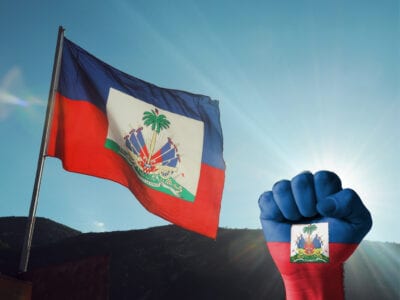
** Main picture:** Haitian flag and fistula in expression of resistance, created using elements from Canva Pro.
Location. Haiti Central Section Between the western and northern parts of the country, it is about 3.487 square kilometres (approximately 2,166 square miles).
Subdistricts Who? Su-du. And...Miribali They are famous for their great religious festivals, music events and huge religious celebrations. People used to visit the Catholic Church there. Every July 16th, Sue Doe celebrates.Mrs. Carmel Mountain." (also known as Vige Mirak Sodo), major events usually begin in mid-July. Lots of pilgrims travel to this area to bathe in the hills called the festival, praying to the saint, bringing a ritual. Voodoo. Large, enjoy cultural events.
The Governor comprises four municipalities, or cities, whose borders are shared with the Dominican Republic: Serka! No!And...Thomasek.And...Blair.- What? And Savantite.I'm sorry. The region has a strong agricultural tradition and is also known for its heavy production of poultry, including chickens, turkeys and ducks, as well as cattle such as cows, goats and pigs.
People have practiced there in free breeding and home farming, and you can find poultry in almost every family's yard. The Central Section is the only area in Haiti without a coast; instead, it shares many rivers and ponds with the Dominican Republic. In addition, its border position facilitates trade between the two countries, although the majority of products come directly from Dominican factories.
Before 2023, the department was known to be peaceful and safe, especially compared to sections. West And...The opiponite. - Because he never faced attacks from armed gangs. But by 25 September 2023, this began to change, after the exposure of the Meribalia University Hospital (HUM) — which was built by the organization “Zanemi Lasanti.“, the largest provider of non-governmental health care in the country, in cooperation with international partners — for the first attack by an armed gang. Police and local self-defence groups were able to repel armed groups, but before these infiltration attempts, many people fleeing violence in the capital area of Port-au-Prince found shelter in the department.
Then it got worse. 30 March-3 April 2025When gangs operating inside and around the capital launched a large-scale armed attack on the central region, specifically targeted Miribalia. And Sut Doe, these gangs were led by Jeff Larrows, also known as "A" Jeff Goo Loa.Who? Canaan Taliban.Wilson Joseph. Lanmo Sanju.From a gang. 400 MawazuBoth groups belong to the criminal coalition known as " .Fif Ansnam." (i.e. living together " in English). Before home and farm fire, the attackers systematically looted the personal belongings of the population and their household property. They also destroyed police stations, released prisoners, burned companies, shot people and looted the property of the host population.
Many people died in these attacks, According to IOM reportsUnited Nations Integrated Office in Haiti (BINUH),Office for the Coordination of Humanitarian Affairs OCHA forced thousands of people to flee their homes and seek shelter in other municipalities within the territory, including cities Hench.And...Bellader.And...Masad.I'm sorry. According to the International Organization for MigrationAbout 17,000 people fled, looking for safety.
Since that period, most of the inhabitants of municipalities such as Miribaliyah and Sut Du have had to move to neighbouring areas, where they live in public places such as schools they use as shelters, and conditions are extremely difficult, with overcrowding and lack of hygiene services.
On 5 June this year, the International Organization for Migration (IOM) was established, in partnership with the Civil Protection Authority in northern Haiti and with the support of the United States Embassy in Port-au-Prince, Programme to transport displaced persons It allowed more than 350 displaced families to move from two shelters in schools in Hinch to a new transit centre. Prior to this initiative, these families lived in classrooms with up to 15 other families, and up to 70 people shared one room.
Now, in addition to providing more space and privacy, they also have better access to water, sanitation and hygiene services. This transition will allow more than 1,000 students to return to their classrooms at the beginning of the new school year in September.
Mary Christian says, she's one of the women at the farm, that when she first got to Hinch, She thought she was gonna die." I left my home where I lived in good conditions, and I ended up sleeping in a school, at offices and spurs and put it on the ground. That hurt me so bad. The stagnant waters were gathering inside the school, and the smell was unbearable. Our children were constantly sick; mosquitoes were stinging them all the time. This is not a life of [...]. Here, I can breathe fresh air. It's completely different from school, where you were exposed to serious health risks. "
Madeline, who was also the victim of gang violence, also expressed satisfaction with the transport plan, saying: " I was sleeping in an open corridor, exposed to cold. Coming here was the beginning of the solution for us. And we finally got a comfortable place to sleep at school, and I didn't even have enough room to change. And I had to bow down so I could get in and out. I'm very grateful to be here, and because I'm finally able to rest with dignity.
“And he... Lucas Garánez, an emergency field official of the International Organization for Migration (IOM), is that the new site includes 20 shelters, comprising 14 different and separate rooms. There are eight sanitation units, each comprising three latrines and three bathing places. There is also an open space where children can play safely. There are about 80 solar lamps to help reduce protection risks and six large water tanks, each with 1,000 gallons. There is also a large collective kitchen with cooking space and safe storage space. "
Despite these improvements, part of the Central Territory remains under the control of armed gangs, which continue to blackmail the population through illegal checkpoints, identification checks, cargo trucks, abductions and sexual assaults on women and girls. These gangs target persons suspected of collaborating with the police as informants, as well as members of self-defence groups, journalists or influentials who call for their terrorist acts. In many cases, when gangs can arrest a suspect or a person who contravenes their rules, they execute him. In some cases, even some gang members do not recognize themselves from such violence.
As these gangs continue to terrorize the population, a group of armed self-defence groups, the Haitian National Police (PNH) and members of the Protected Area Security Brigade (BSAP) and the Haitian Armed Forces (FAd’H) control major areas of the territory, thus far preventing gangs from controlling the entire region.