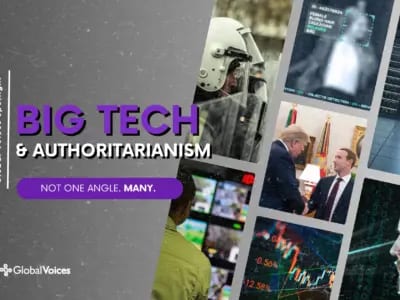
As tech companies have gained nearly unchecked power around the world, they are now intrinsically linked to authoritarian states
Originally published on Global Voices

Image made via Canva Pro. All images are from Canva or in the public domain.
Technology is deeply interwoven into almost every aspect of modern life. Much of this technology has at least the potential for positive impacts in terms of human connectedness and democratization; indeed, Global Voices is built on the premise that we can use the digital connectivity of the internet to share stories, build empathy, and create community across both physical and cultural-linguistic distances.
But the same dynamics that concentrate power and wealth in the world have led to the massive accumulation of Big Tech: corporations so large, so multinational, and so entangled in the functioning of what we have come to consider basic services of communications — from telcos and internet providers to social media and other platforms for communication — that they have disproportionate power and influence over governments as well as over the lives, attention, and finances of individual people.
One of the driving forces behind Global Voices has long been the questions of digital authoritarianism, or how these companies enable, empower, and enact oppression in the digital world and beyond. In October’s Spotlight, “Big tech and authoritarianism,” we want to update and reinforce our coverage of this dynamic with reporting and insights from all of our regions. With these stories, we aim to pull back the camouflage that Big Tech uses to obscure their connection with oppressive governments, and to highlight cases of technological authoritarianism — and resistance — around the world.
Donate to our “Big Tech and Authoritarianism” Spotlight issue, and get more of the coverage you value!
Learn more about Global Voices Spotlights.
Donate to our Big Tech and Authoritarianism Spotlight issue, and get more of the coverage you value!
Rewards
Each individual donation of $15 or more by September 15 will receive an e-book copy of the full spotlight issue once it’s complete.
Stretch goals (cumulative)
$1,000: An additional Undertones column analyzing narrative trends — we have more ideas for fascinating narrative analysis stories than we can produce at our current budget; help us add another one!
$1,500: An additional online panel, bringing together experts, journalists, and analysts to discuss an aspect of the theme!
$3,000: A podcast including follow-up interviews with editors and contributors highlighting some of the most interesting stories in the Spotlight issue.
$10,000: An additional article from each of our regions. Most of our editors have far more article ideas on this topic than they can complete in their paid hours. Help us pay them more, and you get more fantastic insights into Indigenous Rights!
$15,000: Surprise! Based on the topic and our learnings from it so far, we’ll choose an add-on that we think will add the most to our understanding of the Spotlight theme.
Any funds that don’t make it to a stretch goal level will still be used to support the Global Voices newsroom!
You can also support additional translation of all of our stories by donating to Lingua.