Civil groups demand a future plan on when the Government will reform restrictive legislation.
Originally published in Global Voices in Spanish

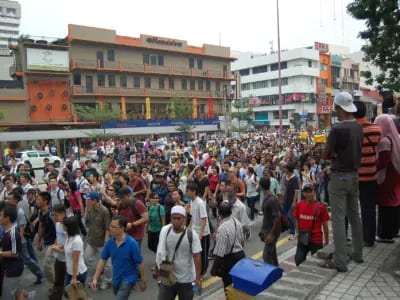
Manifestations during the Berish (change) protests in Kuala Lumpur in 2011. Photography by Hafiz Noor Shams, published on Wikipedia (Creative Commons Attribution 3.0 Unported).
This article is part of the September 2026 Global Voices Spotlight series, "Protest in democracy. "With this series, we seek to explore the various forms of protest, the tactics that States use to de-legitimize and eliminate them, and the complex relationship between protest and democracy. You can support this coverage with a donation Here..
Human rights defenders are calling on the Government of Malaysia to restructure the Bill of peaceful assembly, which contains multiple corrections that will enable the police and authorities to weaken, interrupt and even criminalize protests and public assemblies. Despite months of promises to amend the controversial correction, the Government had delayed the reforms.
This bill was passed in 2012 and has been used by successive governments to accuse protest organizers and civil society leaders of harassment.
After years of criticism of the law, civil societies won a significant victory in 2025 when Prime Minister Anwar Ibrahim was committed to correct the most severe sections of the law, in particular section 11, which requires the consent of an owner before a meeting or protest is held in a specific place.
This was followed by a Failure in July 2025, which removed section 9 (5) of the act of peaceful assembly for unconstitutional and invalid. Section 9 (5) required protest organizers to notify the police at least five days in advance of a protest or assembly. Failure to comply with this regulation was considered a crime that the authorities often cited in order to intimidate activists. In its resolution, the Chamber declared the section "a disproportionate intervention" which became a prohibition rather than a restriction on guaranteed rights.
In the beginning, the Government sought to review the judgement; however, it was ruled out after a meeting in January 2026, which means that the judicial decision remains in force.
Despite this far-reaching decision and the Government's express commitment, the promise to correct the law is stagnated in Parliament in the past year.
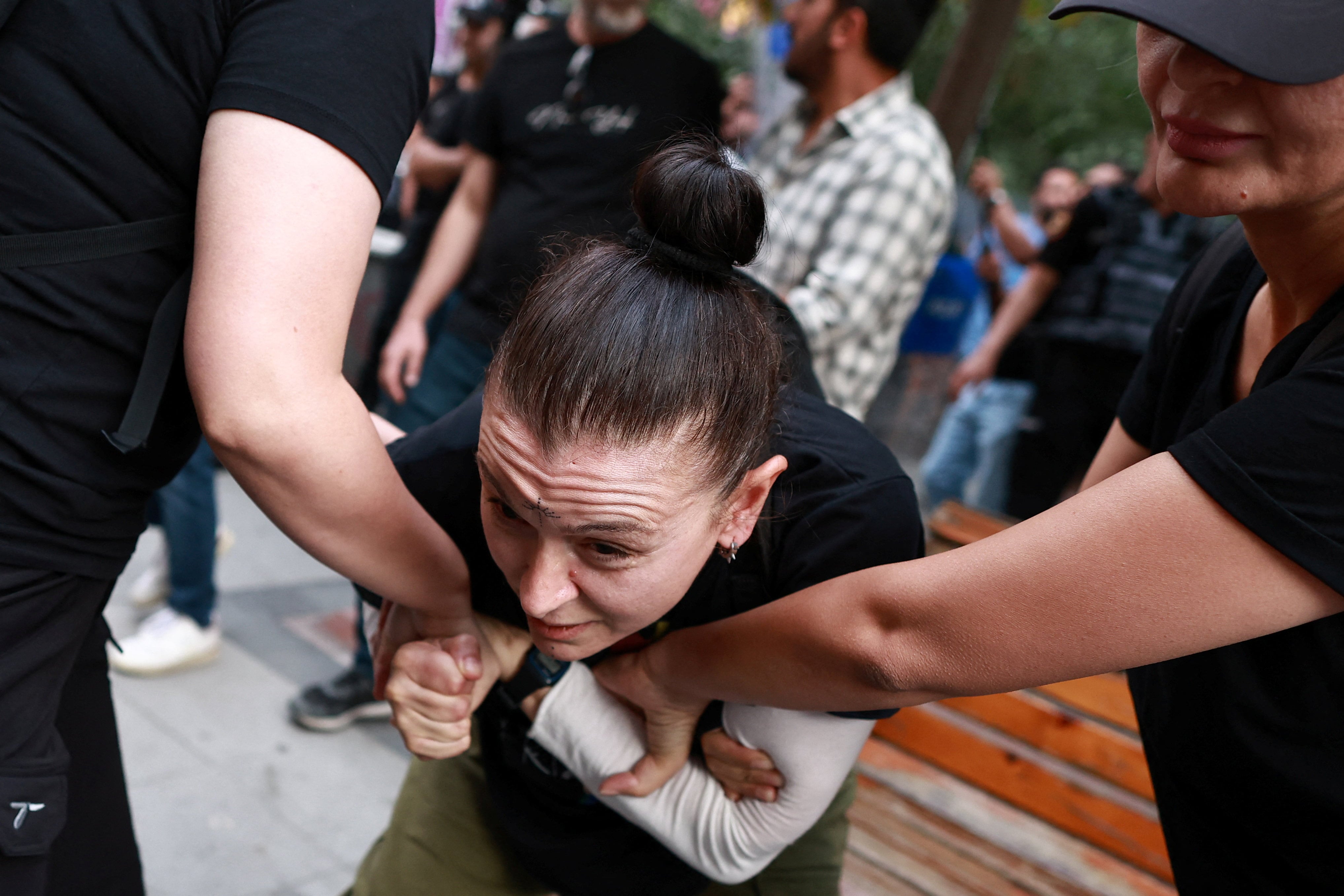
Police violently disbanded a protest in July 2025 near Parliament, while protesters demanded a reform of the "draconian legislation." In addition, the police tried to prevent protesters from giving a memorandum to legislators against the "repressive law."
Nalini Elumalai, lead coordinator of the human rights organization ARTICLE 19, condemned the police act in a statement.
Peaceful assemblies are crucial in bringing to light topics of legitimate public interest. Yet, those who call for accountability, including the reform of archaic laws that are not in line with international standards, are often repressed or silenced.
Peaceful meetings are crucial to raising awareness of issues of legitimate public interest. Yet those who call for accountability, including the reform of archaic laws that do not agree with international parameters, are often repressed or silenced.
The authorities yet use the above-mentioned law to threaten protest organizers, leading, in February 2026, to the Malaysian Human Rights Commission (SUHAKAM) send a reminder addressed to the police.
SUHAKAM notes that the Peaceful Assembly Act (PAA) 2012 places responsibilities on the authorities, including the police, to manage assemblies in a legal, proportionate and facilitating manner. Any enforcement action taken should be founded in clear legal authority, respect due process, and be appropriate to the circumstances.
SUHAKAM reminds you that the 2012 Act of Peaceful Meeting points to the authorities, including the Police, as responsible for the legal, measure and useful handling of the assemblies. Any intervention must be based on clear legal authority, respect that process and be in accordance with the circumstances.
In April 2026, Amnesty International Malaysia expressed dismay at the absence of significant actions to reform the law.
More than a year on, there has been no substantive oversight of the law. Instead, authorities have continued to rely on its repressive provisions, along the Penal Code and Minor Offences Act, to investigate and intimidate protesters.
Announments of reform alone are not enough, as people are still being arrested, investigated, and intimidated for speaking out. The government must urgently amend the Peaceful Assembly Act as it has promised, ensuring it is in line with international human rights law.
After more than a year, there has been no substantial change to the law. The authorities continue to use repressive measures, the Criminal Code and the act of minor offences to investigate and intimidate demonstrators.
The reform announcements alone are not enough; they continue to arrest, investigate and intimidate those who express themselves. The Government must urgently correct the draft law on peaceful assembly as committed, and ensure that it complied with the parameters of human rights laws.
Divya Shesssan Balakrishnan, representative of Amnesty International Malaysia, said anti-corruption activists and student protesters are followed processing for organizing protests. It also stated that Malaysia & apos; s human rights position is often inconsistent with its local actions. As an example, he noted that, despite the Government of Malaysia's criticism of Israel's attacks on the people of Palestine, he also ordered arrest some people who protested against the Israeli interception of the Global Summud flotilla.
In August 2026, a set of civil societies required the Malaysian Parliament to present a clear progress plan to correct the draft law on peaceful assembly. At a press conference, Anas Nor'azim, an official of the Bersih, summarized the feeling of human rights activists: "The same promise is repeated again, but the long-awaited reform continues to stagnate in the study phase."