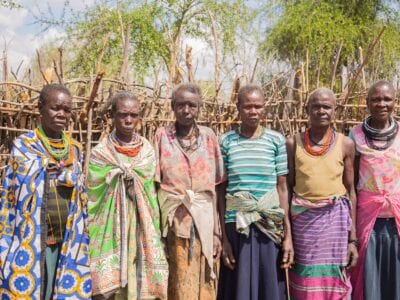
The home of the “indigenous population” is a story of resistance, adaptation and transformation in Mozambique.
Originally published Global Voices Global

The picture. From picking up Speak Media Uganda. Authorized by license Bixels.I'm sorry.
In a time. Portuguese Empire (1505-1975), it was a term “Indigenous people“more than just a description of the population of African Mozambique. It was a legal classification that defined rights, duties and livelihood opportunities. For Africans in Mozambique — including tribes Ronga And...Changan Others living in the region— colonial rule was biased by the State. Being African or born in Mozambique has not guaranteed treatment as a citizen with the same European rights.
National Site Identity
The Portuguese colonial system established a chapter between “Indigenous people“and”Incorporated“ And Portuguese citizens.I'm sorry. Most Africans were classified as “indigenous population” where access to formal education facilities, decent jobs, public administration institutions and other opportunities was very limited. Specifically, the education system revealed this bias.
Later. The children of the colonists have easier access to formal schools.Africans faced a discriminatory education system that prepares them for secondary roles in Colonial economyI'm sorry. School wasn't a place to learn, it was a means of social organization.
Work, taxes, ease of movement
Taxes, labour obligations and the needs of the colonial economy shaped the lives of indigenous people in rural areas. In. South MozambiqueThis climatic reality has been affected near him. South AfricaI'm sorry.
Over decades, thousands of men have cut the border to work in South African mines. The returns of their people formed an important part of the local economy of many societies. Migration to work was not an individual option. It was part of a regional economic system in which work was supported by the Mozambique families and the South African mine economy.
Earth and power.
Colonial discrimination was evident in people ' s relationship to land. African societies have had their own systems of land regulation and use, but this form of ownership and influence was subordinate to power. ColonialismI'm sorry.
The colonial State would have identified areas, recognized or replaced local authorities and recognized the use of land in accordance with the interests and economy of colonial administration. Thus, colonialism has not only controlled people, but their living and work.
1961: End of “indigenous population” on paper
In 1961, Portugal officially abolished the situation of indigenous peoples. It was a significant legal change. Official segregation of indigenous and non-indigenous people ended and the residents were considered to be Colonials. Portuguese citizens. However, social equality has not immediately affected legal equality.
Contracts did not disappear from exclusion from education, economic segregation and discrimination simply as a result of legal change. For many Africans, their daily lives continued to face entrenched inequalities of power and opportunity. The term “indigenous population” disappeared from paper, but did not leave the social structure on which it was based.
1975: citizens of an independent country
Actual change occurred with the independence of Mozambique on 25 June 1975. For the first time, the African people were not subject to colonial rule and occupied the political majority in an independent sovereign State. Text New Nationality Act Resettlement of Mozambique and creation of a national community based on citizenship, not colonial groups.
That was an important change for those who were still “indigenous people”. The person designated by the colonial State as “indigenous population” became a citizen of Mozambique. It wasn't just a nomenclature change. Sovereignty has changed.
Lack of political freedom over inequalities
Independence did not allow economic and social consequences of colonialism. Mozambique inherited a population, mostly rural.Low level of education and lack of technical employment. The new State was also founded on an economy that was essentially dependent on the structure of the colonial Covenant.
Thus, formerly “indigenous population” had a new legal and political situation, but they continued to live in difficult material conditions in many cases. They acquired citizenship, but they did not have economic equality.
From “indigenous population” to Musmbiki
The history of the indigenous Mozbek population is a long and integral journey for three major stages. First, the followers of colonial rule from the African majority, who were subject to a legal category limiting their rights. Then, in 1961, formal equality, which eliminated the situation of “indigenous population”, was not abolished. Finally, independence in 1975, when the people became political independence in their own country.
However, there is one question. While indigenous independence has turned equal citizens before the law, to what extent has the inequality created by the Empire been eliminated? This question remains the absence of many differences in access to education, wealth, land and opportunities after independence. That's a bigger root.
Nationality as accomplishment
The history of indigenous peoples must not be moved as the story of the struggle against colonialism. Because it's a resistant story, adapted, transformed. African societies have maintained languages, culture, organizational structure of the family, religious practices and systems of interdependence despite colonial attempts to restructure society. When independence was achieved, these people formed the essence of the new Mozambique society. The term “indigenous population” is now in the past. “Mozambicans” is the term that arose with independence. But to understand the value of this nationality, it should be remembered the journey before: that was a time when most of them lived. Mozmbek population On its territory without enjoying the same rights as the ruler of the country; independence did not create the history of the Musmbicans, but it finally gave them their own State.