Advertisement
Advertisement

Topic

UK weather

Weather

How autumnal high pressure brings on the dark doldrums

With no wind to disperse the low cloud, mist and fog and less sunlight to burn it off, anticyclonic gloom can set in In summer, a high-pressure system over the UK usually means fine weather. But in the colder months it can result in anticyclonic gloom, characterised by grey skies, mist, fog and drizzle. A settled high-pressure system brings stable conditions and impedes the usual vertical movement of air. This is a recipe for sunshine when humidity is low, but can act like a lid, trapping atmospheric moisture near the surface. Continue reading...
Weather

The day bad weather brought half a million birds to England

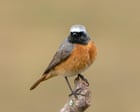
The ‘Great Fall’ of 1965 was caused by harsh conditions forcing migrating species to land on their way to Africa My birding mentor, the late Derek Moore, was also a keen cricketer. But one autumn day in 1965 he was unable to concentrate while fielding because many hundreds of songbirds were landing around him on the pitch at Lowestoft. The arrival of hundreds of thousands of birds along the Suffolk coast that day became known as the “Great Fall”, and it was caused by a weather system bringing cloud, winds and heavy rain. Continue reading...

Weather

Why the strengthening El Niño means fewer Atlantic hurricanes

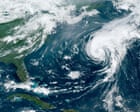
The weather pattern is associated with extreme, stormy weather, but authorities predict a quiet year in one ocean at least ‘Supersizing before our eyes’: UN warns of record El Niño approaching One significant effect of the stronger El Niño is fewer hurricanes in the Atlantic. In the 30 years to 2020, on average the first hurricane arrived by 11 August, the second by 26 August and the third by 7 September. This year the total so far has been zero. At the start of the season, the National Oceanic and Atmospheric Administration (NOAA) predicted a quiet year, anticipating between three and six hur

Weather

Weatherwatch: How English summer clouds can warn of trouble ahead

Mackerel skies and mare’s tails signal arrival of warm fronts that push moisture to high altitudes and creates distinctive clouds “Mare’s tails and mackerel scales make lofty ships to carry low sails,” runs an old English saying about summer skies. Mackerel skies are cirrocumulus or altocumulus clouds in regular but patchy rows, resembling the light and dark-scale pattern on a mackerel. The cirrocumulus version is white and wispy, altocumulus is grey and thicker. One easy rule is that cirrocumulus is narrower than a finger at arm’s length, altocumulus more like three fingers. Continue reading.

Weather

Weatherwatch: Why Britain’s heatwaves don’t always end with thunderstorms

The science behind summer storms – and why they have yet to break the hot spell gripping the country “The English summer: three fine days and a thunderstorm,” George II is reputed to have said, although the line has also been attributed to Charles II and others. It was not recorded until 1867, by which time it was already in common circulation. A brief hot spell ending in a thunderstorm is a familiar pattern, but it is not what we have experienced in recent weeks. Continue reading...

Weather

Weatherwatch: AI model beats standard methods at predicting cyclones

Artificial intelligence system delivers a three-day forecast as accurate as previous two-day predictions Google’s WeatherNext AI model is better than existing systems at forecasting cyclones, according to a paper published in Nature. The AI-based technology gives an extra day of warning, providing a three-day forecast for hurricanes or typhoons that is as accurate as previous two-day predictions. Continue reading...