French President Emmanuel Macron on Thursday denied a report by Spanish newspaper El Mundo that the US Central Intelligence Agency had warned European governments of possible Russian drone attacks from the Mediterranean. He also said in a primetime TV interview that France will send troops and defence systems to Saudi Arabia to help protect the Red Sea port city of Yanbu.
The era of Russian presidents is coming to an end at the World Chess Federation (FIDE). Two Germans and one Kazakh are up for election. Among the issues at play are money, Kremlin influence, and unanswered questions.
The European Union on Thursday imposed sanctions on Russian commentator Xenia Fedorova, whom France expelled in August over claims that she was disseminating "pro-Russian narratives" in the country.
France 24's Gulliver Cragg reports from Kyiv where he says a "particularly heavy night" of Russian strikes on the Ukrainian capital involved the use of ballistic missiles.
Ukrainian authorities say Russia attacked at least four regions overnight with missiles and drones, killing at least five people. Ukrainian forces meanwhile damaged another Russian oil refinery in a long-range strike. The attacks came as President Volodymyr Zelensky met US President Donald Trump in New York for talks on the sidelines of the UN General Assembly. Camille Knight reports.
The EU has agreed to remove Russian billionaires Alisher Usmanov and Mikhail Fridman from its sanctions list, while extending restrictions on nearly 3,000 individuals and companies linked to Russia’s war in Ukraine for another three years. The decision came after difficult negotiations, as EU sanctions require unanimous approval from all 27 member states. Caroline Baum reports.
Azerbaijan's President Ilham Aliyev on Wednesday pardoned a French national imprisoned for espionage a day after the EU lifted sanctions on a Russian billionaire.
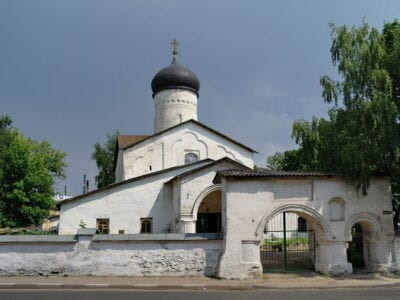
In Russia, authorities are leveraging traditional medieval religious art of the once-independent city-state of Pskov to justify its invasion of Ukraine.
A viral NATO video is being falsely framed online as "war propaganda", with users accusing the Alliance of sharing a "promotional video" designed to prepare the public for imminent war with Russia. But the footage is not new: NATO published it in July 2024 for its 75th anniversary, and it's been stripped of its original context. The claim comes as European leaders warn of growing Russian hybrid threats, including alleged drone, cyber and sabotage activity. Vedika Bahl explains in Truth or Fake.