Advertisement
Advertisement

Topic

quantum

Science

Scientists reach the ultimate quantum limit on a surface

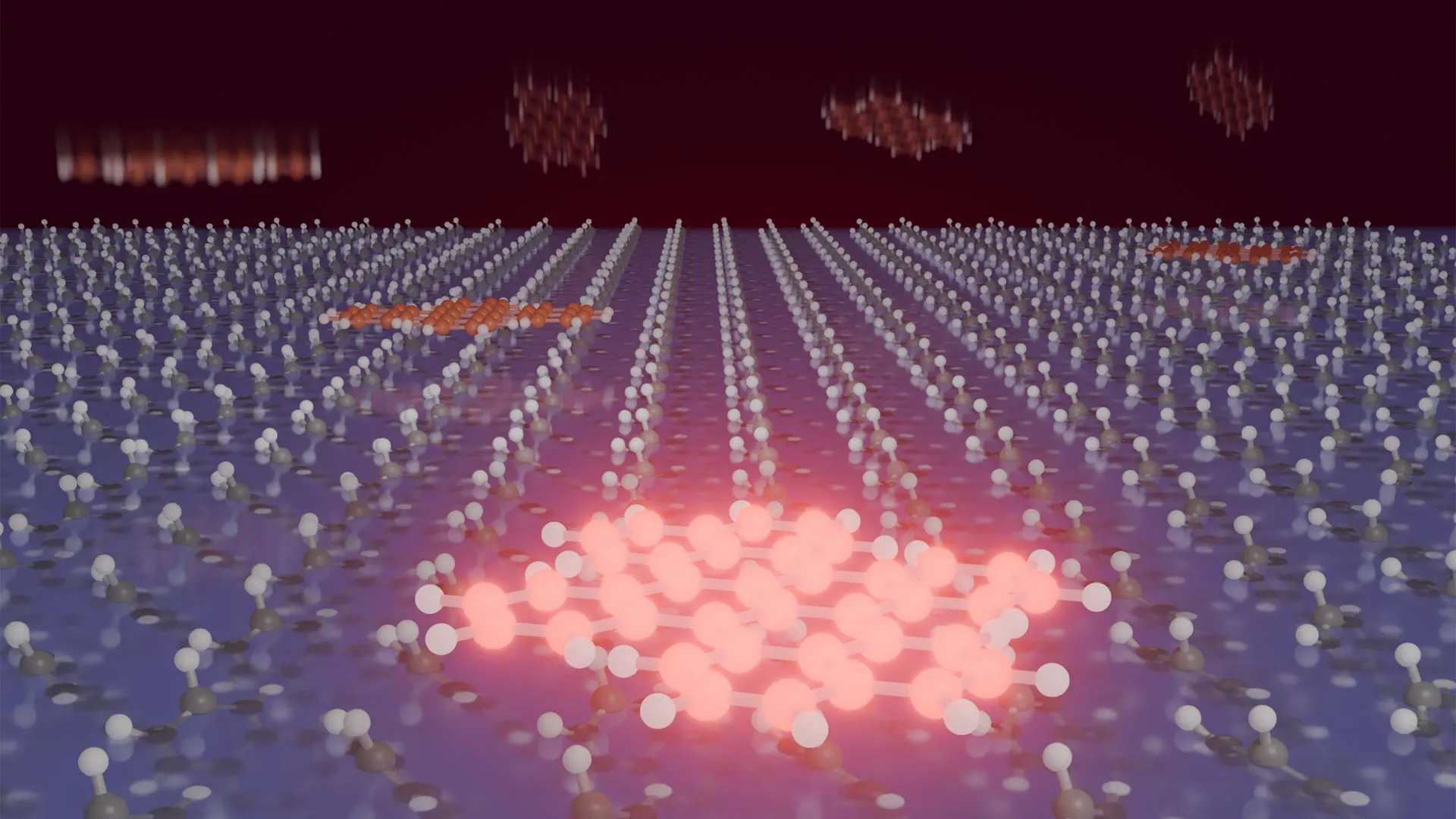
Scientists have achieved a quantum breakthrough by creating an ultra-clean surface where individual molecules can maintain their delicate quantum properties at the fundamental limit. The discovery could unlock unprecedented control over molecules and help drive the next generation of quantum technologies.
Science

Physicists create a bizarre new quantum state called a fractional fermi sea

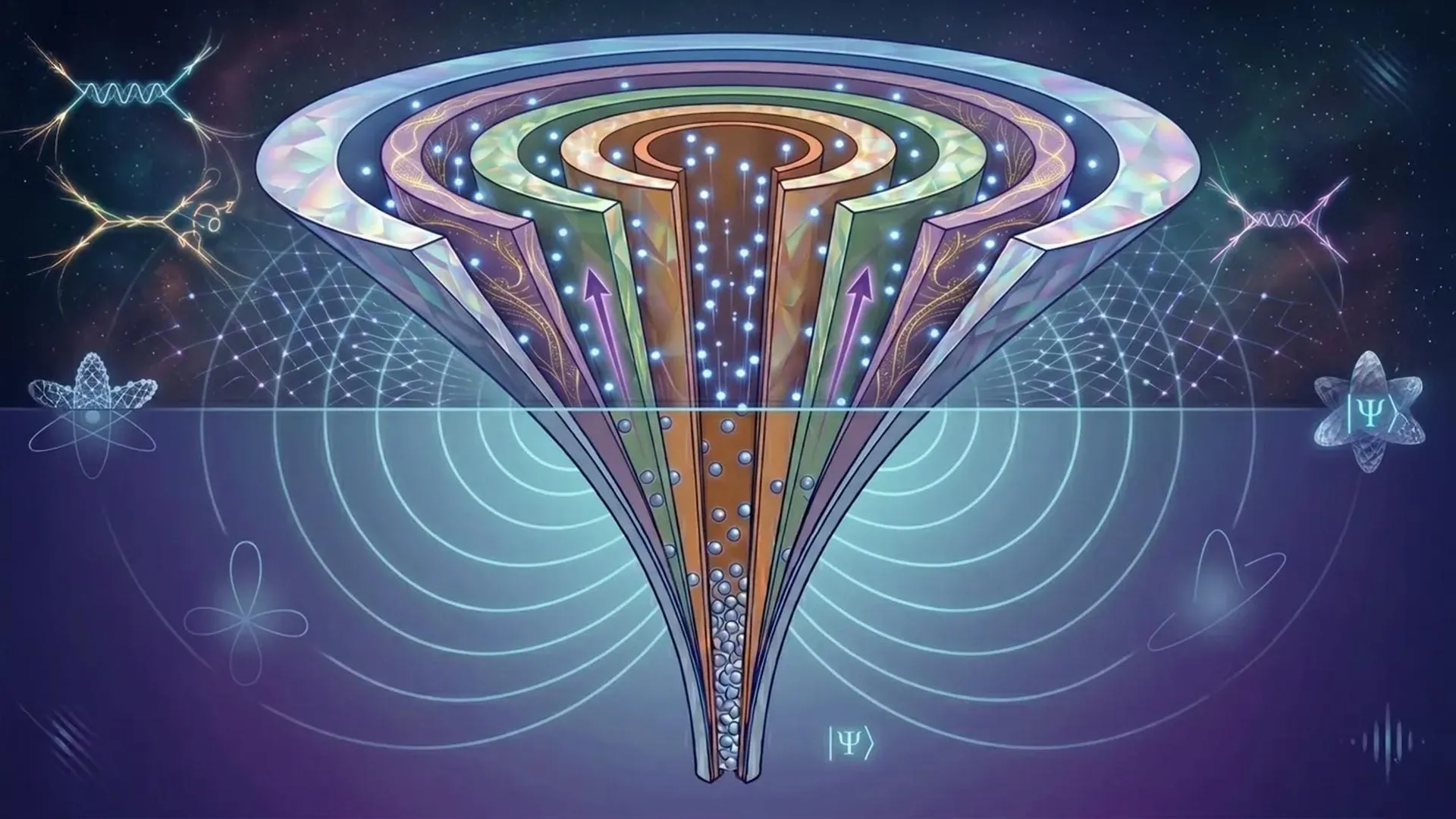
Physicists have discovered a strange new state of quantum matter in which ultracold atoms defy familiar organizational rules, forming a highly excited yet surprisingly orderly configuration called a "fractional Fermi sea." The discovery challenges established quantum theories and hints at exotic quasiparticles that scientists have dubbed potential "super-Fermions."

Science

A quantum highway just one atom high could transform superconductors

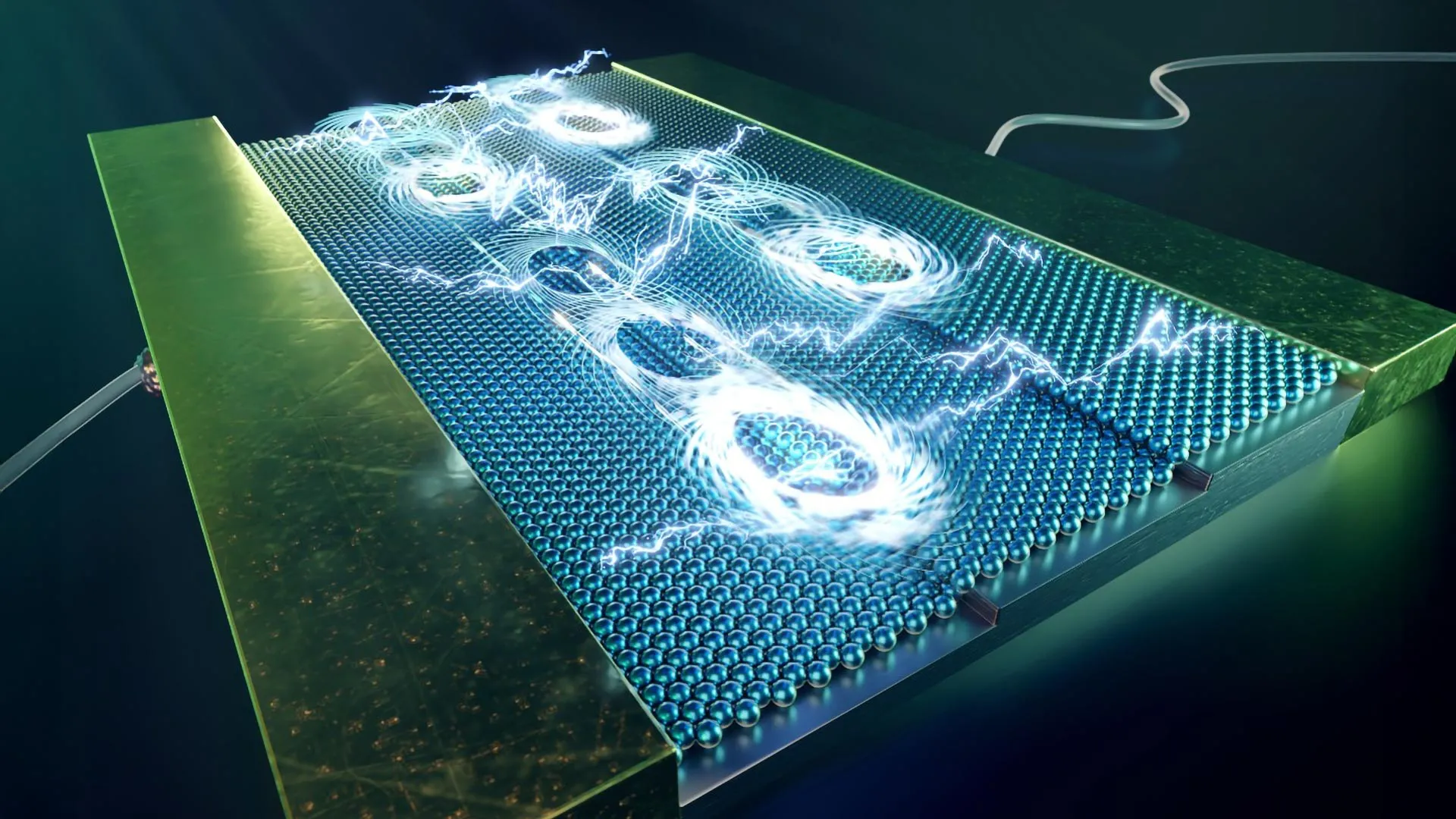
Scientists discovered that atomic steps just one atom high can guide quantum vortices through superconductors, making them move more than 1,000 times more easily in one direction than another. This remarkable control over quantum motion could lead to a new generation of ultra-efficient superconducting electronics.

Science

Scientists recreate a bizarre quantum effect that stops a particle cold

Oxford physicists have recreated a bizarre quantum effect in which a particle responds to a magnetic field without ever traveling through it. Using a hybrid quantum computer, they demonstrated how introducing a simulated magnetic flux could completely halt a particle's movement through quantum interference. The experiment brings a decades-old prediction into a new setting where matter and quantum fields influence one another.

Science

A famous quantum effect can finally be predicted in real materials

Scientists have developed a powerful new way to calculate the Kondo effect, a strange quantum phenomenon that appears when magnetic atoms are embedded in metals. Instead of relying on simplified models, the method uses the real atomic and electronic structures of materials, allowing researchers to predict their behavior with far greater accuracy.

Science

A quantum prediction from 1931 just came to life

Nearly a century after physicist Hans Bethe predicted them, scientists have created and directly observed unusual quantum states known as “Bethe strings” in an ultracold gas. By cooling cesium atoms to near absolute zero and trapping them in thousands of tiny one-dimensional tubes, researchers were able to make groups of atoms bind together without ordinary chemical bonds. These strange clusters could contain six or more particles and even collide with one another without falling apart.

Science

Electrons slow to a crawl in a strange new quantum state

Scientists at the University of Chicago have uncovered a surprising quantum state in the layered magnetic material Fe5GeTe2, where huge numbers of electrons move together unusually slowly while remaining quantum coherent. The behavior contradicts existing theoretical predictions about how the material’s magnetism should work and suggests scientists may need to rethink its underlying physics.

Advertisement
Science

Caltech physicists finally measure a quantum energy ladder predicted 40 years ago

Researchers have experimentally observed energy patterns that physicists have predicted for about 40 years. By arranging laser-trapped atoms into a quantum simulator, they recreated two different quantum tipping points and watched the atoms fall into the exact energy ratios predicted by theory. The technique could now be used to explore mysterious quantum systems where scientists do not already know the answer.

Science

Quantum computer simulates matter “popping into existence”

Scientists recreated a particle-forming process linked to the extreme physics of the early universe using a 13-ion quantum simulator. The breakthrough suggests quantum computers could eventually help researchers investigate how matter formed and evolved after the Big Bang.

Science

Quantum computing’s “dark horse” just proved it can go universal

Researchers have shown that exotic quantum particles called non-Abelian anyons can perform the full range of operations needed for universal quantum computing. Using 54 qubits on Quantinuum’s H2 processor, they combined braiding and fusion to unlock capabilities that braiding alone could not provide.