Advertisement
Advertisement

Topic

Physicists

Science

Physicists created a tiny universe and watched time emerge without a clock

Scientists have created a miniature universe in the laboratory that could help answer one of the biggest mysteries in physics: What is time, and where does it come from? Using 24,000 ultracold atoms, a University of Birmingham researcher built an isolated quantum system that repeatedly expands and contracts, mimicking the Big Bang and a possible Big Crunch. Remarkably, the experiment showed that time could emerge from changes happening inside the system, without relying on an external clock.
Science

Physicists create a bizarre new quantum state called a fractional fermi sea

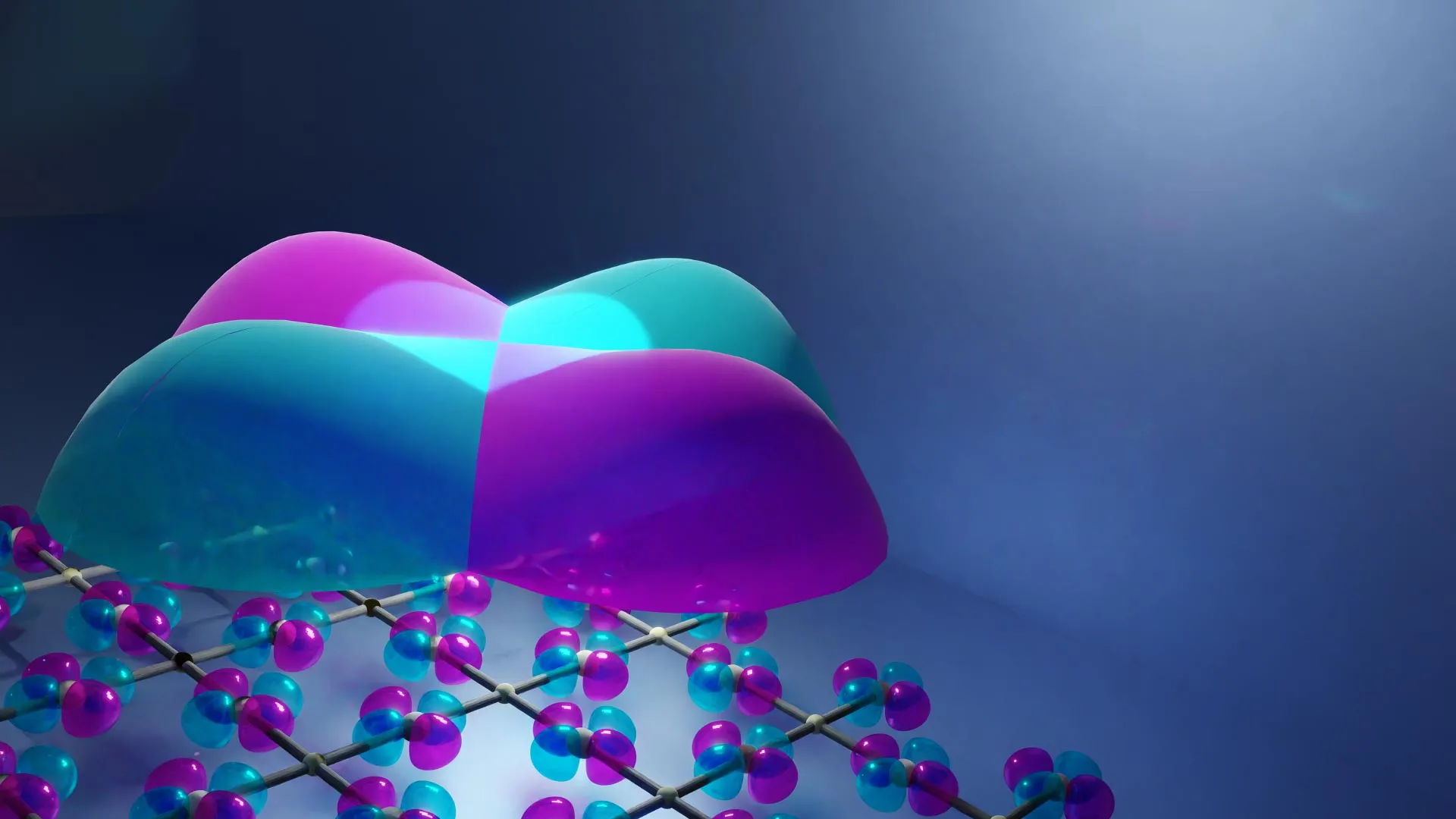
Physicists have discovered a strange new state of quantum matter in which ultracold atoms defy familiar organizational rules, forming a highly excited yet surprisingly orderly configuration called a "fractional Fermi sea." The discovery challenges established quantum theories and hints at exotic quasiparticles that scientists have dubbed potential "super-Fermions."

Science

Physicists discover “astonishing” property of light that defies expectations

Scientists have uncovered a surprising hidden ability of light that allows it to develop spinning, twisting behavior as it travels through empty space, without special lenses, mirrors, or materials. Researchers discovered that light’s internal geometry can naturally produce left- and right-handed patterns, challenging long-standing assumptions about how light behaves. By carefully arranging a beam’s structure, scientists can control where and how these spinning patterns emerge, unlocking a new way to manipulate light.

Science

Physicists just found the ‘ghost’ of superconductivity

Physicists have found striking evidence for an unusual form of superconducting behavior in uranium ditelluride, where electron pairs organize into rippling patterns called pair density waves. Even more surprisingly, these patterns appear to survive after ordinary superconductivity disappears, suggesting that the electron pairs responsible for superconductivity may begin forming before the material actually becomes superconducting.

Science

Physicists just saw quarks make waves in the Big Bang’s primordial soup

Physicists at CERN’s Large Hadron Collider have captured the clearest evidence yet that quark-gluon plasma, the scorching-hot matter that filled the newborn universe, behaves like a true liquid. By tracking individual quarks as they blasted through the plasma, researchers saw them leave behind ripples, splashes, and swirling wakes much like a duck moving through water. The finding suggests this primordial “soup” is so dense that it can slow speeding quarks and respond collectively as a fluid.

Science

Caltech physicists finally measure a quantum energy ladder predicted 40 years ago

Researchers have experimentally observed energy patterns that physicists have predicted for about 40 years. By arranging laser-trapped atoms into a quantum simulator, they recreated two different quantum tipping points and watched the atoms fall into the exact energy ratios predicted by theory. The technique could now be used to explore mysterious quantum systems where scientists do not already know the answer.

Science

The LHC just ruled out another hiding place for quantum black holes

Physicists searching through Large Hadron Collider data found no evidence that the machine has been producing microscopic quantum black holes, but the result sharply narrows where such exotic physics could still be hiding. These hypothetical black holes could form if extra spatial dimensions make gravity much stronger at extremely tiny scales, potentially offering clues toward the long-sought theory of quantum gravity.

Advertisement
Science

What kills Schrödinger’s cat? Gravity may not be the answer

Physicists have put a decades-old idea about why the strange rules of quantum mechanics disappear in our everyday world to one of its toughest experimental tests yet. Deep beneath Italy’s Gran Sasso mountain, researchers searched for an extremely faint radiation signal predicted by a theory suggesting that tiny fluctuations in spacetime, caused by gravity, gradually destroy quantum superpositions. After 62 days of measurements with a highly shielded germanium detector, they found no such signal.

Science

Physicists can’t agree on how the Universe works

A massive worldwide survey of physicists has revealed surprisingly little agreement about some of the universe’s biggest mysteries. No majority backed the standard cosmological model, a leading explanation for dark matter, or any single theory of quantum gravity. One area of stronger agreement stood out: 68% said the Big Bang does not necessarily represent the beginning of time. Researchers say the divisions show just how alive and unsettled the frontiers of physics remain.