Politics
Support for Merz plunges after CDU’s losses to Germany’s right and left
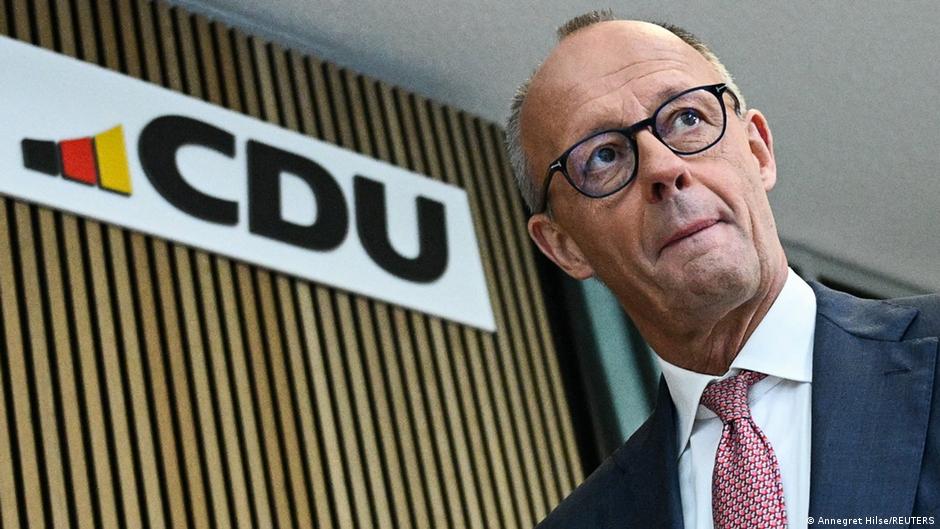
Chancellor Friedrich Merz hits a record low approval rating after his party suffered defeats in three state elections.
International news in seven languages
Topic
Chancellor Friedrich Merz hits a record low approval rating after his party suffered defeats in three state elections.
Germany's conservatives are dialing up the pressure on their center-left partners ahead of crunch talks next week. Meanwhile, Volkswagen's latest cost-cutting push has triggered a furious response.
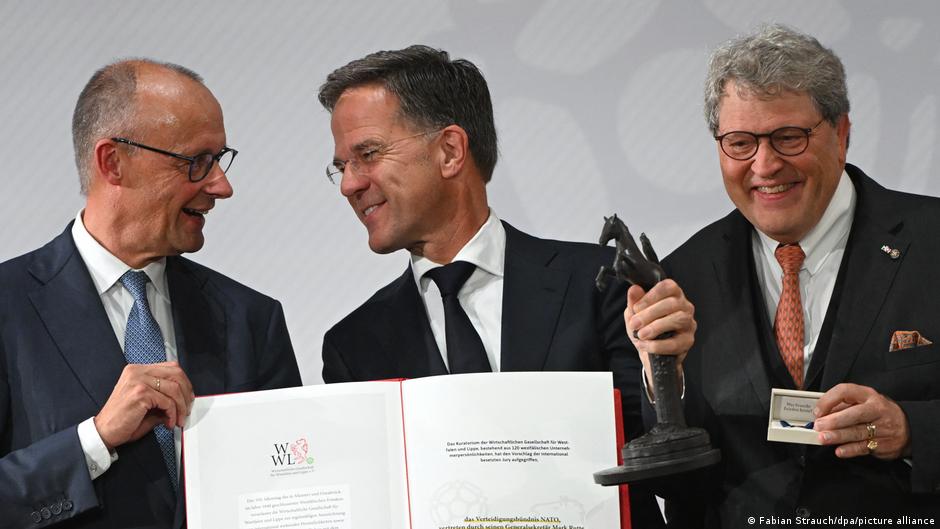
At a ceremony to honor NATO, the German chancellor warned that Russia will threaten the rest of Europe if it isn't stopped in Ukraine. In other news, the German military will set up its first drone regiment.
Chancellor Friedrich Merz and his counterparts from five countries have threatened to withhold approval to the EU budget proposal unless it's cut by billions of euros. Follow DW.
US legislative elections promise to bring more debt volatility, while Merz's weakness in Germany and French presidential will be a challenge for a declining euro
The electoral attacks in several regional elections in Germany have called into question the leadership of the conservative
Voters are turning away from the centre in Germany as fears grow about the economy and migration.
Germany's far-right AfD and the socialist Left Party gained ground in recent state elections, while the centrist parties lost support. The biggest loser is Chancellor Friedrich Merz.
The collapse of the Democrats in the German elections accelerates the erosion of the centre and leaves the Chancellor in a situation of extreme fragility
Germany's far-right AfD and the socialist Left Party gained ground in recent state elections, while the centrist parties lost support. The biggest loser is Chancellor Friedrich Merz.
The far-right AfD and the socialist Left Party have grown their vote in recent state elections, while the centrist parties see their support wane. The biggest loser is Chancellor Friedrich Merz.
The regional elections in Germany left the CDU of Friedrich Merz in crisis, after a historical setback that the Chancellor described as "disastrous" by not reaching the 5% threshold in some states. In contrast, the ultra-right of AfD celebrated unpublished victories: its leader Alice Weidel said the party is ready to become a decisive force in the country. Meanwhile, Die Linke was consolidated in Berlin, where his candidate Elif Eralp celebrated the triumph with a message of social change.
The increase in AfD will mark Berlin's position on key issues for the future of Europe in the antecedent of a super-election year
From the headquarters of the Christian Democratic Union (CDU), the German Chancellor, Friedrich Merz, said that he will not give up his post after the defeat of his party in the elections for the Berlin City Hall, in which the left party was won, and after the AfD consolidated his electoral ascent in Mecklemburgo- Western Pomerania. Merz stated that the result "responds to his person" and that these are more profound changes that the country demands. Report from our correspondent, Valentina Godoy.
The German Government and the various political forces analyse the results of the regional elections held on 20 September: those of the Berlin Parliament and those of the Federal State of Mecklemburgo- Western Pomerania. Both votes increase the pressure on the political future of German Chancellor Friedrich Merz and show that not everything is lost to the left in the country. To discuss the subject, we discussed with Ralf Leiteritz, a polytechnist at the University of Potsdam (Germany), in El Invitado del Día de France 24.
Jessica Parker explains what happened in the German regional elections and it means for Merz.
The German ultra-right, embodied in the AfD, consolidates its electoral ascent following the victory of Sunday in the Mecklemburgo- Western Pomerania region to the detriment of the official Christian Democratic Union (CDU), which also lost ground in Berlin in front of the Left Party. This chain of defeats has in the hands of German Chancellor Friedrich Merz, who, however, advocated to maintain his conservative coalition in the name of the country's "democratic future."
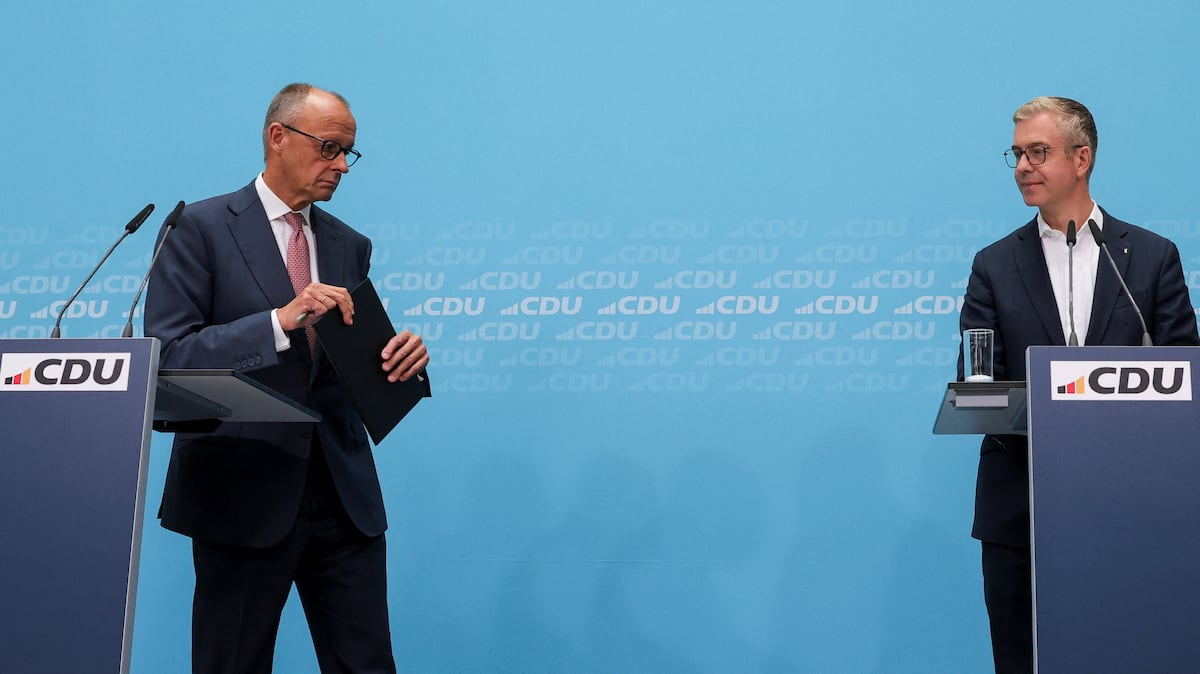
German Chancellor Friedrich Merz and CDU representatives held a press conference on Monday, September 21, after the party suffered its worst regional election defeat in postwar Germany. Merz called the result in Mecklenburg-Western Pomerania a “disaster”, as the CDU fell below the 5% threshold for entering the state parliament. Helmut Schmidt fellow at the German Marshall Fund of the US, Markus Ziener, shares further details.
The Mecklemburgo- Western Pomerania debacle leaves German Democrats out of a regional Parliament for the first time in its history
Political shifts in Germany are being watched closely in Europe and beyond, Katya Adler writes.