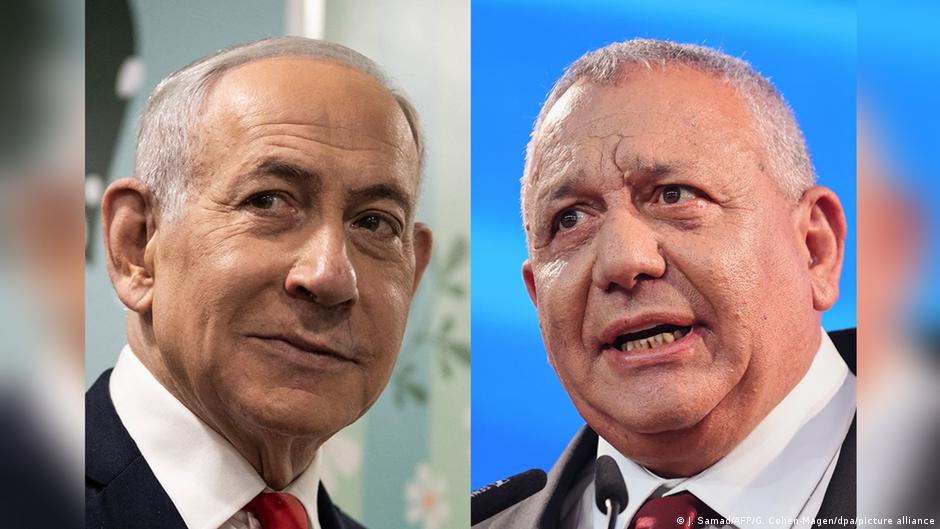
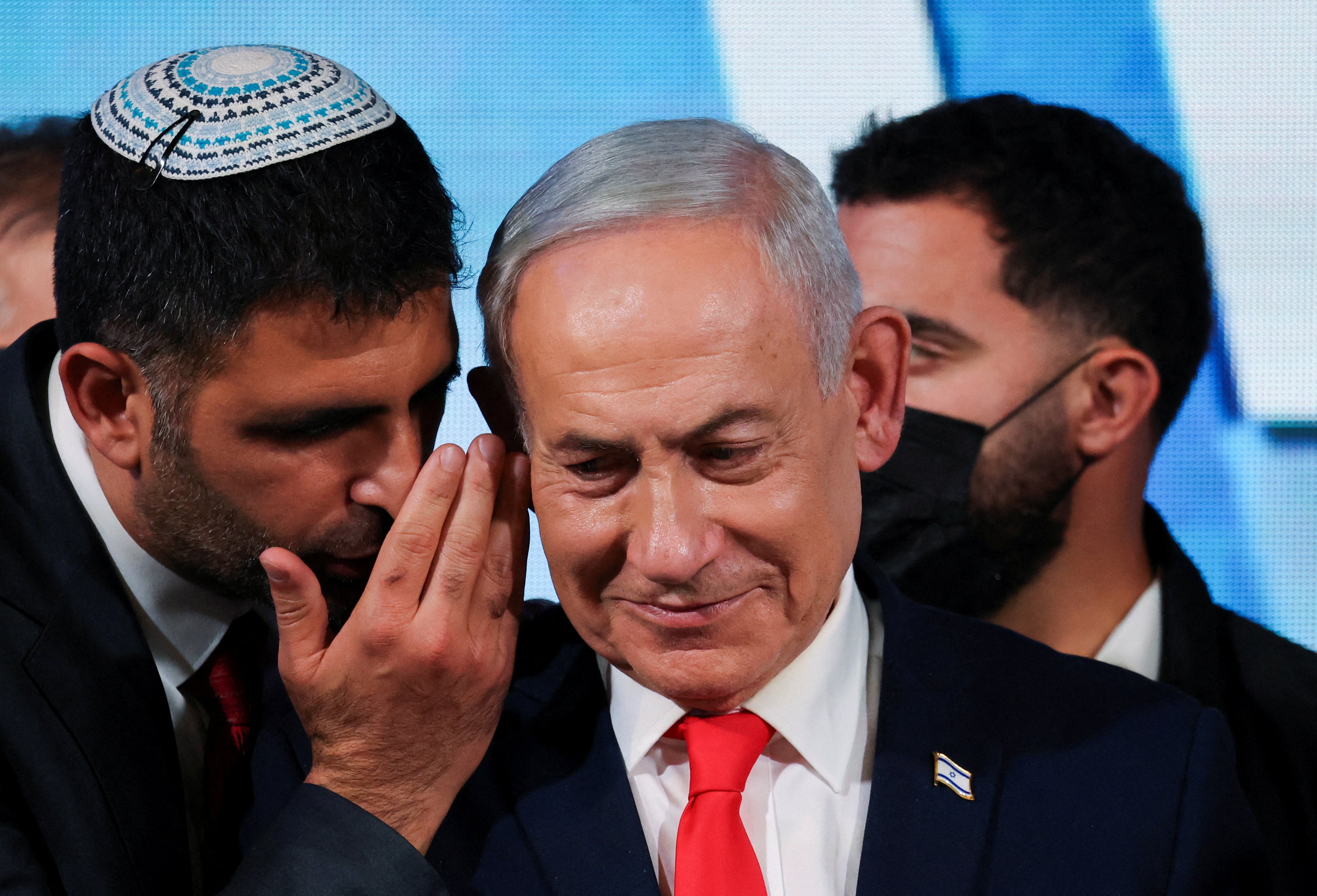
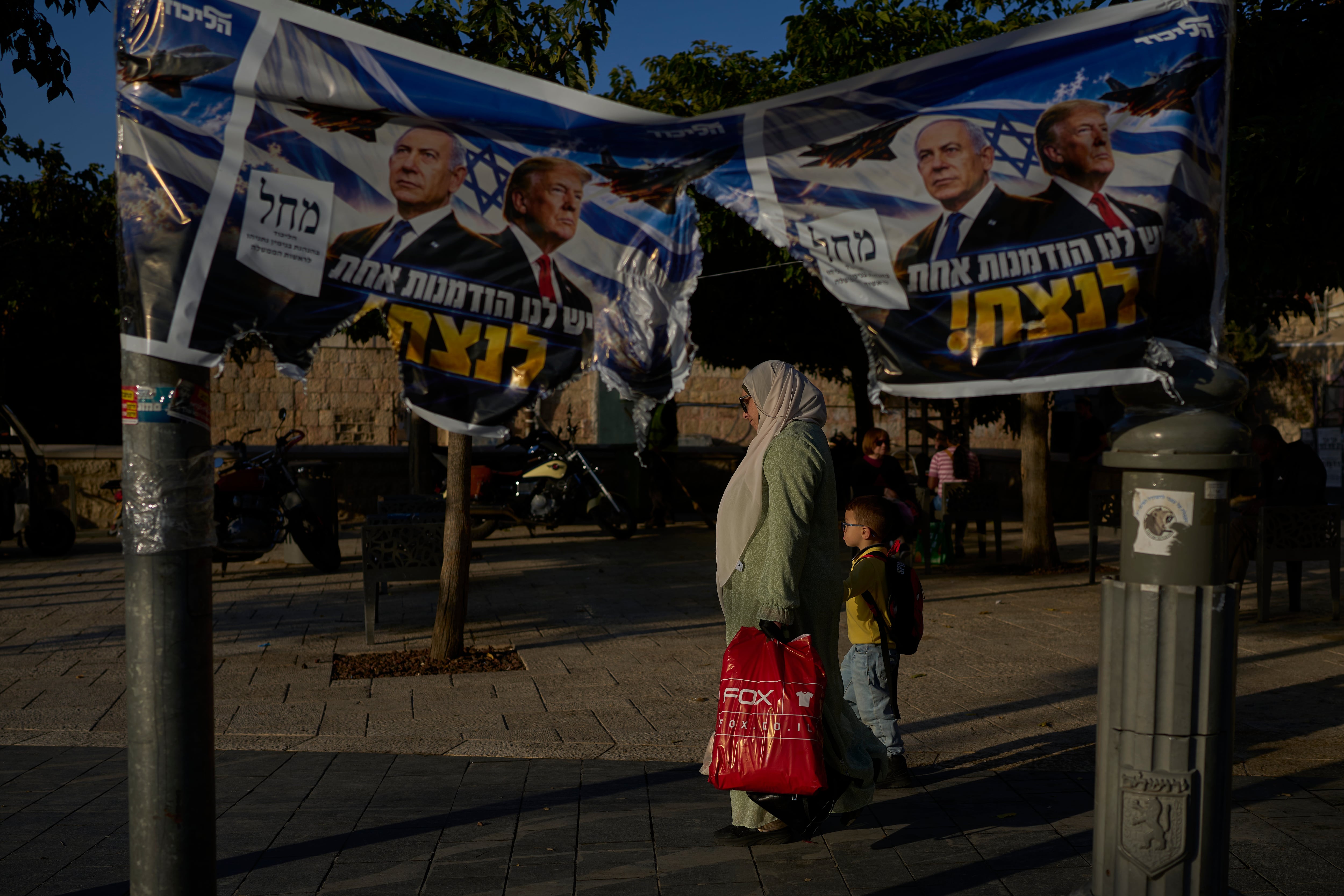
With nearly 99% of votes counted, the pro-Netanyahu bloc is just ahead of the anti-Netanyahu bloc, but neither grouping is expected to win a majority, with tough coalition talks ahead. Follow DW.
The Likud turns the polls and achieves a new victory after exploiting the fear of the majority of Israel of a nuclear Iran and racism towards the Arabs
The 27 October elections in Israel had the highest participation rate since 1999, however, no block reached the 61 seats required to form a coalition. While the Netanyahu block is ahead of that of Eisenkot, it does not reach the majority. On the other hand, the opposition bloc could form a coalition if it was to join the Arab parties, a scenario to which several of its partners are opposed. Why are Arab parties determining? Can there be change of government in Israel? We analyzed it with Efraim Davidi, Professor of History at the University of Tel Aviv, at
The legislative elections in Israel marked a key moment for the country's political future. After the results are known, a new stage of negotiations between the parties is beginning to try to form a coalition of government, a process that is often decisive in the Israeli parliamentary system. Are Arab parties key to determining a winner? Pedro Goldfarb, a political historian and analyst, addresses the issue in France 24.
The Israelis were divided after the legislative elections. The preliminary results place Benjamin Netanyahu's bloc as the most voted force, though without a clear majority to form government. While some citizens celebrate the result and expect political stability, others express their rejection of a new Prime Minister's mandate. In the occupied West Bank, many Palestinians claim that they want to leave Netanyahu, but they doubt that there are substantial changes, considering that the main parties hold similar positions on the conflict.
On Wednesday, 28 October, the Israelis woke up with an uncertain political future, after no block got in the ballot box the number of seats needed to form Government. However, one of the days was the high participation of the Arab-Israeli population. According to 'The Times of Israel', one of the factors of the rebound was the action of the Israeli National Security Minister and ultra-right-wing, Itamar Ben-Gvir. In the words of this medium, Ben-Gvir's "hard policies" united the Arabs in Israel.
The scrutiny, already advanced, does not give the majority to the bloc in favour of either the Prime Minister or the Jewish opposition. Arab parties become indispensable partners, but the Executive accuses them of electoral fraud
In the absence of the completion of the final count, the Palestinian citizens of Israel are moving towards a record number of seats in Parliament, becoming a decisive force for the formation of a government. While these parties have shown their willingness to work together to unblock Benjamin Netanyahu, the leaders of the Jewish opposition face the dilemma of access to a cooperation that they promised in campaign not to carry out.
Two Arab-majority parties are set to win a historic 19 seats in total, amid a record turnout at the polls in Israel on Tuesday. Voters from the community, descendants of Palestinians who stayed after Israel's creation and who make up around 20 percent of the population, have been enraged by the Netanyahu government's ultra-nationalist Jewish vision for the country and the Palestinian territories. FRANCE 24's Emerald Maxwell reports.
In Israel, the surprises only start with election night. They're still counting ballots in a vote that featured the highest turnout in decades, historic inroads by Arab parties and Benjamin Netanyahu's worst result since 1999. And yet, Israel's longest-serving prime minister still has a path to staying in power. As we await the definitive makeup of the next parliament, our panel breaks out the calculators and pie charts: in what scenario does Netanyahu survive? Is the issue with the right-wing Likud leader or his policies?
Benjamin Netanyahu is expected to face greater constraints as Israel’s caretaker prime minister following Tuesday’s election. However, experts say his government could retain significant powers, including the authority to wage war against Iran. So what impact will the election have on Israel’s approach to Iran? France 24’s International Affairs Editor Angela Diffley shares further insights.
The economic crisis that has struck Lebanon since 2019 is further aggravated. The resumption of the war between Israel and Hezbollah slowed down the fragile recovery recorded last year. The World Bank expects the Lebanese economy to contract 6.4 per cent this year, while inflation would be around 17.5 per cent. In this context, inequality deepens and crosses all areas of daily life, from households to businesses and consumption habits. Serge Berberi and Renée Davis report for France 24.
The war in the Middle East never really stopped, but Lebanese expect little change in Israeli policy after Israel's elections. In Israel, as votes are counted, no clear winner has emerged yet. France 24's correspondent Renée Davis reports the latest.