World
US aviation sanctions disrupt Iran flights, push travellers overland
Travel disruptions intensify as Iranian airlines lose access to airspace, pushing civilians towards costly land routes.
International news in seven languages
Topic
Travel disruptions intensify as Iranian airlines lose access to airspace, pushing civilians towards costly land routes.
Iran has threatened countries enforcing US sanctions on its airlines, warning that their airports could face disruptions
Pezeshkian leaves door open for negotiations, while calling out US blockade against Iran in Strait of Hormuz.
Masoud Pezeshkian's defiant speech to the UN comes after the US president threatened to "annihilate" Iran if a peace deal is not agreed soon.
Iranian President Masoud Pezeshkian has accused Israel and the US of applying ‘double standards’.
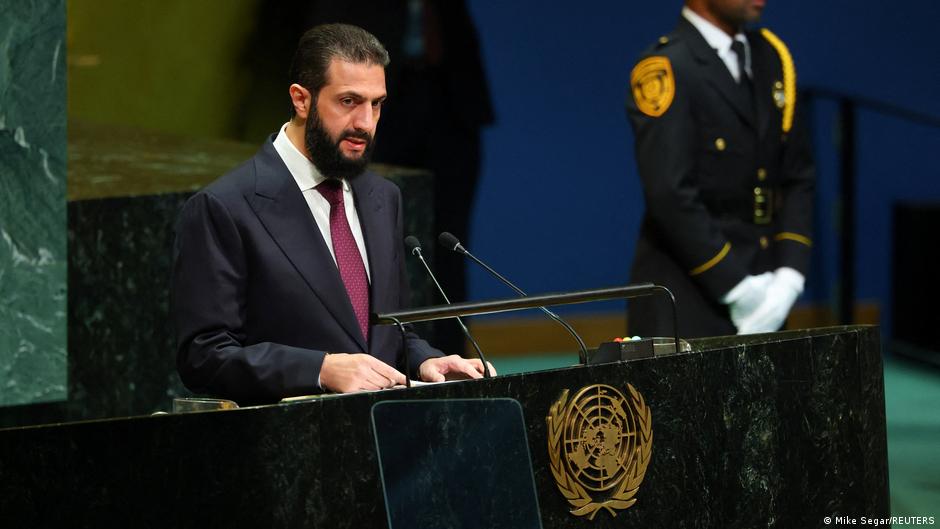
Iranian President Massoud Pezeshkian said on Wednesday 23 September that his country had been "victim of terrorism", referring to the US military offensive and Israel against the Islamic Republic of Iran. Speaking before the United Nations General Assembly, the leader referred, inter alia, to former Supreme Leader Ali Khamenei, "assassed without justification and legal framework".
Iranian President Massoud Pezeshkian accused the United States of "terrorism" in his address to the UN General Assembly on Wednesday. Despite the offensive tone of his speech, the dialogue resumed between Iranian officials and the American envoy Steve Witkoff on the margins of the UN session.
In front of the UN General Assembly, Iranian President Massoud #Pezeshkian responded to the US President's remarks the day before, and said on Wednesday that Iran had been "victim of terrorism," referring to the US-Israel offensive against the Islamic Republic.
Iranian President Masoud Pezeshkian gave a defiant wartime address at the UN on Wednesday accusing the US of terrorism in his country and saying Iran would not "bend at the knee". But as Pezeshkian called for diplomacy, Iranian officials downplayed their talks with US counterparts on the sidelines of the gerenal assembly as "not anything new".
Iranian President Masoud Pezeshkian told the UN General Assembly that ‘warfare knows no borders’.
The trial of 33 defendants in the five Boeing 777 cases found in Iran was referred to the Malagasy courts on 27 October. One year after their discovery, the accused were prosecuted, inter alia, for forgery and the use of forgery and for violating national sovereignty.
US pressure is being exerted on the Islamic Republic of Iran on Wednesday, 23 September, particularly for airports hosting flights to and from Iran. The explanations of Sarah Andersen, France 24 correspondent in New York and Hasni ABIDI, political scientist and director of the Centre for Arab and Mediterranean World Studies and Research (CERMAM).
Iranian President Masoud Pezeshkian has hit back at US President Donald Trump’s speech in his address to the UN General Assembly. He opened by showing images of Iranian civilians killed in US strikes, saying they demonstrated the impact of US and Israeli military action against Iran. During his speech, the US delegation walked out of the General Assembly hall. France 24 International Affairs Editor Kethevane Gorjestani has more.
Pezeshkian began his address to the U.N. General Assembly in New York City by holding up photos of children he said were killed by U.S. and Israeli bombs.
UK to refuel Saudi fighter jets and France to secure energy infrastructure amid fighting with Yemen's Houthi group.
Day 2 of the UN General Assembly saw speeches from the leaders of Syria, Iran and Ukraine, among others. Additional topics that were expected to be discussed include climate change and AI. Follow DW live.
Architect of the circumvention of the Iranian oil embargo, billionaire Babak Zanjani was sentenced to death in 2016 in a corruption case before making an unexpected return in grace. Today, Washington suspects him to be at the head of a cryptocurrency platform managing payments received for transit through the Strait of Ormuz.
World leaders are heading to New York for the world's biggest diplomatic gathering: the UN General Assembly. Throughout the week, attention will turn to the war in Iran, climate change and the race to rein in AI. FRANCE 24's Monte Francis and Theresa Squatrito from the London School of Economics discuss what to expect.
Analysts say a deal this week is unlikely - core disagreements between Washington and Tehran remain unresolved.
Iran started talks with the United States through a Qatari mediator in New York on Wednesday, 23 September, and set out certain conditions. In particular, Tehran called for an end to the war on all fronts and for a halt to what it calls "acts of aggression" on the part of Washington, said the spokesman for the Iranian Foreign Ministry. The explanations of Bruno Daroux, an international columnist in France 24.