Advertisement
Advertisement

Topic

Environment

Style

Hide and chic: are clothes and apparel made from alternative leathers better for the environment?

Vegan leathers are complicated by questions of commercial viability and sustainability. How do they compare to traditional leather? Change by degrees offers life hacks and sustainable living tips each Saturday to help reduce your household’s carbon footprint Got a question or tip for reducing household emissions? Email us at changebydegrees@theguardian.com In sustainable fashion, breathless promises about vegan leather have arrived thick and fast for over a decade. Innovations promise mushroom and cactus alternatives that look and feel like real leather – minus the negative associations with m
Weather

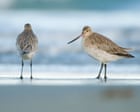
Weatherwatch: UK’s migrant waders feel the effects of a changing Arctic

Warmer winters and springs are drying out wetlands and the birds are missing out on an abundance of insects to eat When we think of spring migrant birds, it is easy to focus on songbirds such as warblers, flycatchers and swallows. Yet during late spring, many are waders – passing through Britain on their way north to breed in the high Arctic from their winter quarters in sub-Saharan Africa. According to the British Trust for Ornithology’s regular migration blog, it has been a good year for waders: including more common species such as ringed and grey plovers, bar-tailed godwit, sanderling and

Weather

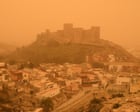
Weatherwatch: Saharan dust drops microorganisms into European soil

Scientists are examining how ‘blood rain’ affects soil microbiome, with Portuguese vineyards a particular focus Dust events, when thousands of tonnes of fine sand whipped up from the Sahara are dumped over Europe, are becoming more intense. These sometimes produce “blood rain” that leaves visible red streaks, and while generally harmless, the dust is not sterile but brings a freight of microorganisms. One big concern is how imported microbes may affect the soil microbiome and impact agricultural fertility and crop yield. Southern Portugal lies along one of the main deposition routes for Sahara

Weather

Weatherwatch: Cleaner clouds may slow rate of global heating

Study shows falling dust levels are making clouds more reflective, an effect not taken into account in climate models Cleaner clouds are helping to slow the rate of global heating, a study shows. Falling levels of dust in the atmosphere are making clouds more reflective. This previously unidentified effect is not being taken into account by current climate models, which may mean they are slightly overestimating the projected rate of global heating. Researchers analysed satellite observations of high clouds in the northern hemisphere and assessed the ratio of ice crystals to liquid droplets ove

Weather

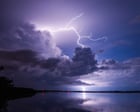
Weatherwatch: How thunder is made

Sound of thunder varies depending on distance of listener from lightning as atmosphere muffles and absorbs sound A bolt of lightning heats the air almost instantly to as high as 30,000C, causing explosive expansion and a supersonic shock wave that becomes thunder. What that thunder sounds like to a listener depends largely on where they are. Nearby lightning produces a distinctive snap or crack, or a startling explosive boom. Large, complex lightning with multiple segments generates a peal of thunder, a series of booms of different pitches as the sound from each of the segments reaches you in

Weather

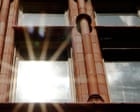
Low-e windows keep homes cool … but may set neighbours’ property on fire

Low-emissivity windows also keep houses warm in winter, but use on bowed glass can have magnifying-glass effect Low-emissivity or low-E window glass is a useful green technology for keeping buildings warm in winter and cool in summer … but a rare side-effect can set the neighbours’ property on fire. The glass is coated with a thin layer of metal or metal oxide which lets visible light through but acts like a mirror in the infrared. Heat from the interior is reflected back in, retaining warmth in winter, while unwanted solar radiation is repelled in summer. Continue reading...

Weather

How birds are coping in the heatwave

Birds are unable to sweat but they keep cool by seeking shade and bathing As we humans sweltered in the record-breaking late June heatwave, we might not have spared much thought on how birds were coping. Unlike us, birds are unable to sweat, so instead they have evolved other ways to avoid overheating. These include seeking shade beneath trees, bushes and hedgerows, spreading their wings to allow cooler air to circulate around their body, and opening their bills to cool down, the same as dogs do when they pant. Birds are also able to pump blood into their bare parts – bills, legs and feet – wh

Weather

Weatherwatch: How increased Arctic shipping affects cloud formation

Shipping routes opened by climate change mean more industrial pollutants in the air The gradual reduction in Arctic ice has started to open up new shipping routes, with marine traffic increasing by about 40% over the past 12 years. All these ships leave trails of pollutants in the air, which are already having a measurable climate effect. Aerosol particles in engine exhaust act as nuclei for water droplets, promoting cloud formation. Like aircraft, ships may leave contrails behind them in the sky. Continue reading...

Advertisement
Weather

Weatherwatch: rainclouds are travelling farther in warmer world

Climate crisis affects not only the amount of rain that falls but where, with implications for land use and water security Have you ever wondered how far a raindrop has travelled before it lands on you? It may have journeyed thousands of kilometres from the ocean, sea or lake it evaporated from – and now research shows raindrops are travelling even farther than they used to. Warmer air can hold more water vapour, and that is changing not only how much rain we receive but also where it falls. Travis Aerenson, of the University of Wyoming, and his colleagues modelled atmospheric moisture movemen

Travel

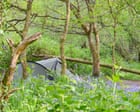
I camped in one of Britain’s last remaining rainforests

A fragment of temperate rainforest lies on the edge of Dartmoor, and following years of conservation work, its owners have now opened up a sustainable campsite next to this fragile ecosystem Mist blankets the valley as I wheel my camping gear down the small hill towards a clearing ringed by trees and shrubs. A picnic bench sits at its edge, angled towards the reason why I’m here: one of the last remaining fragments of temperate rainforest in Britain. I’m pitching my tent at Wray Valley Camping, a low-impact site on Dartmoor’s eastern edge between Lustleigh and Moretonhampstead, where I’ll spen

Weather

Weatherwatch: Paving over front gardens is leading to hotter nights

Changing paved areas to grass and planting trees can reduce urban heat island effect by as much as 1C, study shows Add together all the UK’s household gardens and they cover an area three times larger than all the country’s nature reserves combined. But as the demand for car parking increases, many front gardens are being paved over, with research showing that this loss of green is adding to the urban heat island effect, particularly at night. In 2005, about 7.5% of the UK’s front gardens were paved; by 2025 that had risen to 55%, according to Royal Horticultural Society estimates. Those hard

Weather

Weatherwatch: Why Britain’s heatwaves don’t always end with thunderstorms

The science behind summer storms – and why they have yet to break the hot spell gripping the country “The English summer: three fine days and a thunderstorm,” George II is reputed to have said, although the line has also been attributed to Charles II and others. It was not recorded until 1867, by which time it was already in common circulation. A brief hot spell ending in a thunderstorm is a familiar pattern, but it is not what we have experienced in recent weeks. Continue reading...

Weather

Weatherwatch: Climate crisis fuelling steep fall in migratory bird numbers

Many species under threat use the African-Eurasian flyway, one of the planet’s largest mass-migration systems It may still feel like summer, but in the world of birds, autumn migration is already well under way. Cuckoos and swifts have already left us, and while swallows and many species of warbler will not depart our shores until September, many species of Arctic-breeding waders have begun to stop off at our coastal marshes to refuel for their long journey south. This year, however, there could be fewer than usual. A review by the British Trust for Ornithology, working with other internationa

Weather

Weatherwatch: how to protect our railways in hotter summers

Steel rails warping and signalling equipment failing in metal cabinets are among the problems to be solved Tarmac softens in the summer heat, which may cause problems on the roads, but even trains running on steel rails are not immune. Railways in the UK are generally designed to operate within a 45C temperature range. The rails expand slightly in the heat, and excessive temperatures can produce “sun kink” with rails warping into S-shapes. The effect is small but the distortion can derail fast trains, so speeds are reduced for safety. Continue reading...

Weather

Why El Niño can mean less rain but heavier downpours for India

El Niño is associated with weaker monsoons in India – but research suggests it can also bring more extreme rainfall The world is bracing for a “super” El Niño, and its effects are already being felt in India, where the monsoon has brought less rain than average but more intense downpours. Meteorologists predict that the current El Niño, which is developing over the Pacific, could be one of the strongest in living memory. India is likely to be heavily affected, particularly later in the monsoon, when El Niño’s influence tends to strengthen. Continue reading...

Weather

Weatherwatch: soil moisture deficit – how dry are the UK’s thirsty soils?

SMD is the moisture the soil must make up until it is at capacity, with very dry conditions over most of England and Wales When the ground is thoroughly wet, after excess rainwater has run off it is said to be at field capacity. Meteorologists describe drought in terms of soil moisture deficit (SMD) from field capacity. The SMD is a measure of how thirsty the soil is, expressed as how many millimetres of rain it would take to top it up to field capacity. In southern England, the SMD tends to hover around zero in winter when fields are wet. In summer it may be about 100mm, going up to 150mm or

Advertisement