World
Why has Brazil accused the US of election interference?
The Latin American country will vote for its next president, as Lula da Silva and Bolsonaro clash over sovereignty, security and ties with Washington.
International news in seven languages
Topic
The Latin American country will vote for its next president, as Lula da Silva and Bolsonaro clash over sovereignty, security and ties with Washington.
With the first round of Brazil's presidential election taking place Sunday, Wall Street is gearing up with starkly different market predictions.
Brazilians vote on Sunday for the first round of the presidential election. Left-wing President Luiz Inacio Lula da Silva, 80, is running for a fourth non-consecutive term. His main opponent is the extreme right-wing candidate Flavio Bolsonaro, 45, son of former President Jair Bolsonaro. President Lula relies in particular on the support of the new middle class, but this is not guaranteed. Report by Valeria Saccone, with the story of Antoine Fenaux.
The first round of Brazil’s presidential election on Sunday pits two well-known names in the political ring: Lula vs. Bolsonaro. But it’s not former president Jair Bolsonaro facing off against the incumbent head of state – it’s his eldest son, Flavio Bolsonaro. He’s less charismatic than his father but just as ideologically radical as the family patriarch.
Brazilian President Lula da Silva held his final campaign rally in Rio de Janeiro on Friday
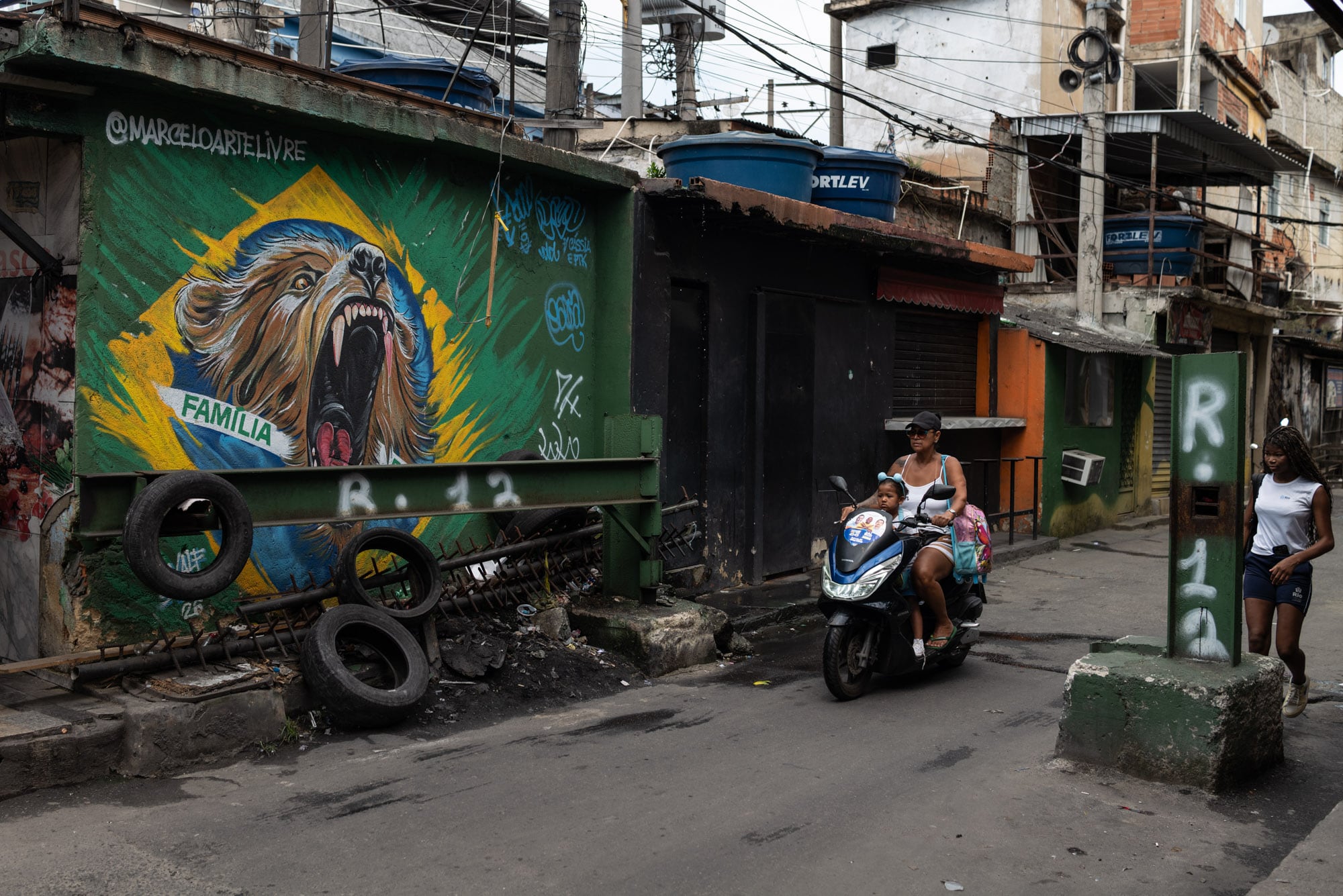
Almost a year after the most lethal police operation in the country's history, nothing has changed in the favelas of Rio. Lula and Bolsonaro reach the ballot box with opposite recipes in safety
On the eve of the first round of the Brazilian presidential, news that the United States suspended face-to-face attention at its embassy and consulates in that Latin American nation, claiming "security issues," has again fueled fears of Washington's interference. However, the Donald Trump Government did not establish a direct relationship between this measure and the elections. He also did not detail the nature of the threat that caused the suspension.
Lula da Silva and Flávio Bolsonaro reach the final line of the campaign as the main protagonists of the Brazilian presidential elections. Corruption, which was already one of the sensitive issues for the electorate, is once again gaining interest following the outbreak of a financial scandal with several ramifications and accusations that spatter the son of former President Jair Bolsonaro and Judge Alexandre de Moraes, a key figure of Brazilian justice and the usual target of right-wing criticism.
Luiz Inácio Lula da Silva and Flávio Bolsonaro are facing the next 4 October in a close election by the Brazilian Presidency. Disinformation, lack of debate and polarization have marked the campaigns of the candidates. We analyze how the country reaches the first round with Paulo Velasco, Professor of International Policy of the UERJ.
Brazil is preparing for presidential elections marked by polarization between the current president, Luiz Inácio Lula da Silva, and Flávio Bolsonaro, senator and son of former President Jair Bolsonaro. Two days after the first round, the polls reflect an adjusted dispute: a Datafolha poll places Lula with 42% of the voting intention and Flávio Bolsonaro with 38%. If no candidate exceeds 50% of the valid votes, they could both face in a second round on October 25. What is at stake for Brazil and what would a new Lula mandate or the return of the b
The South American country goes to the polls on Sunday after a controversy over its patron saint who revived the polarized campaign between left and right.
Over the past five years, applications for residence permits submitted by Brazilians in Paraguay have more than doubled. Many of them are Bolsonaro supporters who are afraid October's presidential election will be won by incumbent leader Lula – whom they accuse of plunging the Latin American giant into an unprecedented economic crisis. FRANCE 24's Fanny Lothaire, Valeria Saccone and Mélanie Blondeau report, with Jan Onoszko.
Still little known at the national level a few months ago, 45-year-old Senator Flavio Bolsonaro is now in collusion with the current President Lula in the polls. Brazil could thus add to the long list of Latin American countries to have turned right to the far right in recent months.
As Brazil heads to the polls, one issue that could influence votes particularly in the rural south is access to firearms. Under Jair Bolsonaro, Brazil became more heavily armed than ever before: the number of registered hunters, shooters and collectors – known by the acronym ‘CACs’ – increased sevenfold in four years. Luiz Inacio Lula da Silva promised to reverse this trend, much to the irritation of the powerful gun lobby. France 24’s team in Brazil sent this report.
This weekend, Brazilians vote in the first round of the presidential election, in a duel between Lula and Flávio Bolsonaro. The last pre-election debate was finally cancelled. Lula had announced her absence, officially retained by another commitment. Flávio Bolsonaro refused to debate without his main opponent. A confrontation that was to be the last major television battle before the vote. The details of David Dellos, an international columnist in France 24.
Brazilian presidential candidate Flavio Bolsonaro on Thursday bowed out of the final debate ahead of elections pitting him against leader Luiz Inacio Lula da Silva, who also declined to attend. Lula, on the cusp of 81, will face off against the son of ex-leader Jair Bolsonaro in a first-round vote on Sunday, with polls giving him a slight advantage. The pair are neck-and-neck in projections for a potential runoff on October 25, however.
In Brazil, the number of hunters, shooters and collectors exploded under Jair Bolsonaro. In the south of the country, especially in Santa Catarina, the arms defenders have challenged the restrictions imposed by Lula since 2023. In this very conservative state, the pro-arms lobby is already mobilizing for the next elections. Report of France 24 correspondent in Brazil, Fanny Lothaire.
The mudslinging between Brazil’s incumbent President Luiz Inacio Lula da Silva and his election rival, Flavio Bolsonaro, has heated up ahead of what is expected to be an extremely close vote this weekend. From stating loose rumours as facts, to taking comments completely out of their context, they are both doing everything they can to win a few more votes.
The extreme polarization between the left-wing president and the right-wing Flávio Bolsonaro leads many voters to choose the lesser evil
While Luiz Inácio Lula da Silva proposes to strengthen cooperation with the different states to combat crime, Flávio Bolsonaro defends tougher penalties and the classification of the PCC and the Vermelho Command as terrorist organizations. The debate takes place in a context marked by the expansion of these gangs linked to drug trafficking, money laundering and territorial disputes inside and outside Brazil.