World
Germany's far-right AfD forges a pro-Russia alliance with the BSW
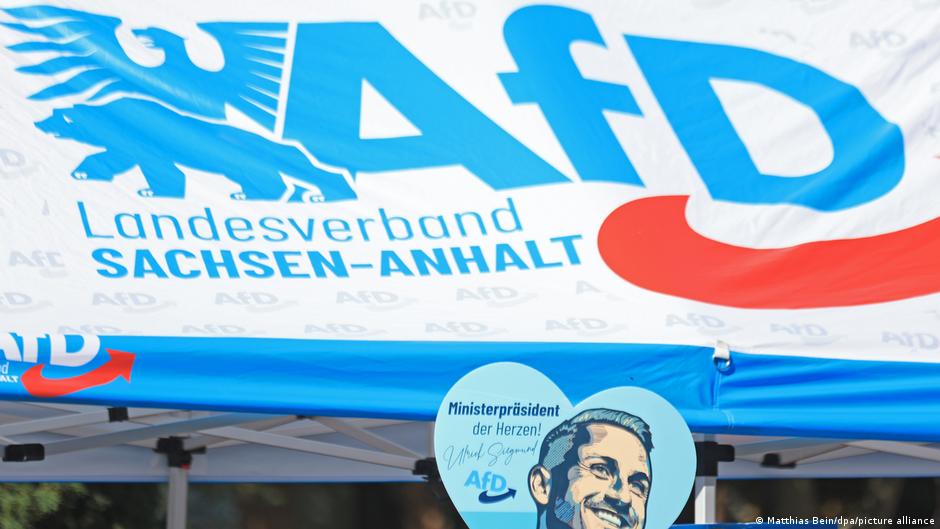
In Saxony-Anhalt, the AfD and BSW are joining forces to push for negotiations with Moscow. What is driving this rapprochement?
International news in seven languages
Topic
In Saxony-Anhalt, the AfD and BSW are joining forces to push for negotiations with Moscow. What is driving this rapprochement?
Bavaria's conservative leader has called on bloc members who voted for an AfD parliamentary speaker to come forward. Meanwhile, the ruling coalition has been rocked by a major resignation. DW has more.
Bavaria's conservative leader has called on bloc members who voted for an AfD parliamentary speaker to come forward. Meanwhile, the ruling coalition has been rocked by a major resignation. DW has more.
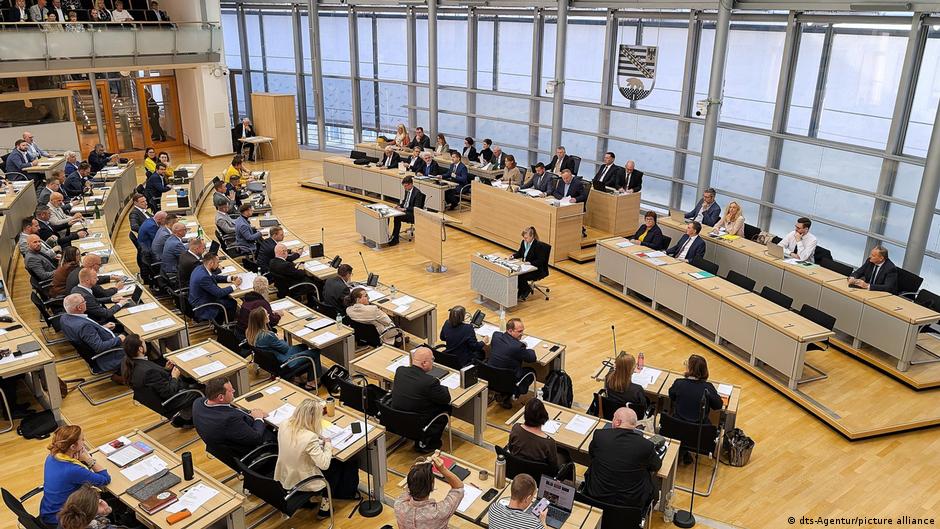
Lawmakers of the center-right CDU may have voted for the far-right AfD candidate for parliamentary speaker in Saxony-Anhalt. Germany's Social Democrats warn of a "unique breach of taboos."
At its first session, the new state parliament in Saxony-Anhalt is to vote on a speaker nominated by the far-right AfD. And Germany's foreign minister has warned that the climate crisis could fuel extremism. DW has more.
AfD moves forward in negotiations to tie the support of BSW's nationalist left and reach power for the first time in a 'land'
The prospect of an AfD-led government in Germany’s Saxony-Anhalt has exacerbated long-standing fears that the far-right Russia-friendly party may gain access to sensitive information of interest to the Kremlin, fuelling debate as to whether and how it can be barred from classified intelligence.
Two weeks after the triumph of AfD in Saxony-Anhalt, the results of the regional elections in Berlin and Mecklenburg-Western Pomerania confirm the breakthrough of the far right in Germany. It is a debacle for Chancellor Friedrich Merz's CDU, who has acknowledged his failure but remains on course, promising to continue the reforms undertaken. Jeannette Süss (of the Ifri Franco-German Relations Study Committee) was the Invitation of At the Heart of Info.
The German regional elections in Mecklenburg-Western Pomerania and Berlin both marked the defeat of the same party: Friedrich Merz's CDU. After the recent shock caused by the wide-ranging victory of the far right in Saxony-Anhalt, already analysed as a failure of the Chancellor's policy, can Friedrich Merz survive these two new setbacks?
Will German Chancellor Friedrich Merz survive Sunday's regional elections? The debate was opened after the recent electoral failure of its Conservative party in Saxony-Anhalt, where the far right achieved an overwhelming victory.
Two German states are heading to the polls today – in Berlin and the state of Mecklenburg-Western Pomerania. The far-right AfD party is expected to make further gains after securing a historic win in Saxony-Anhalt two weeks ago, though it has no realistic path to power in Berlin. Sunday's vote is a key test for Chancellor Friedrich Merz, one that could determine whether he can hold on to power. Details with Jamie Smith-Maillet, FRANCE 24 international affairs editor.
Friedrich Merz and the German Government face their greatest challenge in the regional elections. The ultra-right of AfD achieved a historic triumph with 44% in Saxony-Anhalt, while the CDU is weakened. What is at stake for the political future of Germany?
Germany is gearing up for two more pivotal state elections on Sunday: in the capital Berlin and in the largely rural region of Mecklenburg-Western Pomerania. All eyes are on the far-right AfD, which after recording its best ever result in the recent Saxony-Anhalt elections, is hoping to once again make sweeping gains. The anti-immigration party's surging popularity is proving challenging for Chancellor Friedrich Merz and both elections are expected to further test his leadership. Story by Eliza Herbert.
Will German Chancellor Friedrich Merz survive Sunday's regional elections? The debate was opened after the recent electoral failure of its Conservative party in Saxony-Anhalt, where the far right achieved an overwhelming victory.
Germany's far-right AfD party is riding high after its latest electoral triumph in Saxony-Anhalt. But one question remains: Does it actually want to govern?
The Alternative for Germany party is riding high after its latest electoral triumph in Saxony-Anhalt. But one question remains: Does the far-right party actually want to govern?
The AfD is riding high after its latest electoral triumph in Saxony-Anhalt. But one question remains: Does the far-right party actually want to govern?
Germany's far-right AfD party has long claimed that the eastern state of Saxony-Anhalt has been left behind. Is that really the case? A closer look at the data offers some interesting insights.
With well over 40% for the far-right Alternative for Germany (AfD), Saxony-Anhalt has witnessed a landmark election night. DW's reporters were on the ground.