Business
In hunt for Starlink alternative, Ukraine partners with Nokia and satellite maker ICEYE
With SpaceX imposing speed limits on Starlink in Ukraine and hampering military operations, Kyiv is looking for alternatives.
International news in seven languages
Topic
With SpaceX imposing speed limits on Starlink in Ukraine and hampering military operations, Kyiv is looking for alternatives.
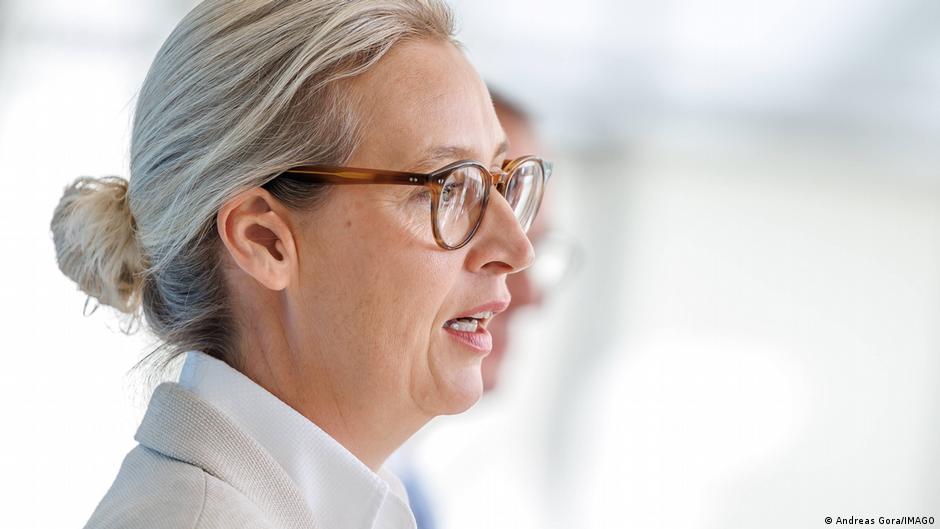
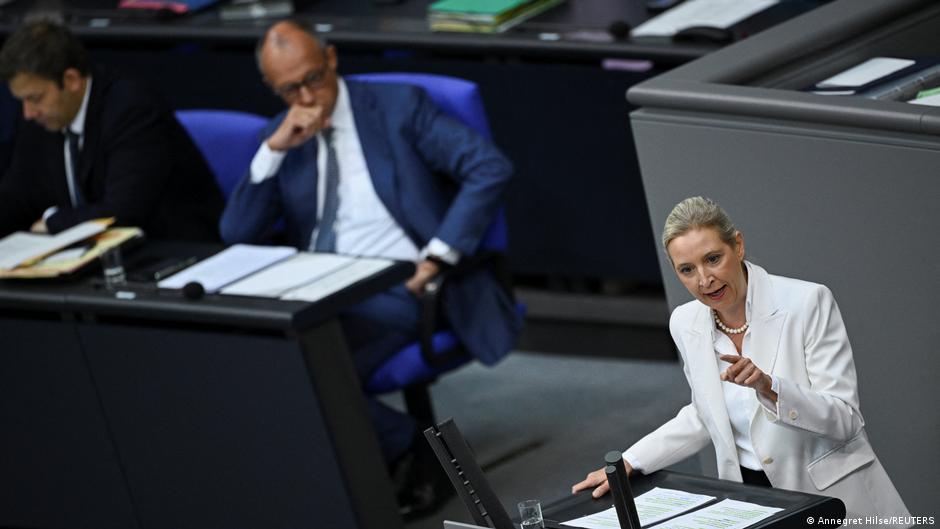
Far-right Alternative for Germany co-leader Alice Weidel reveals the party's plan to reform the EU. Meanwhile, Nvidia CEO Jensen Huang was in Berlin to talk to developers and investors. DW has more.
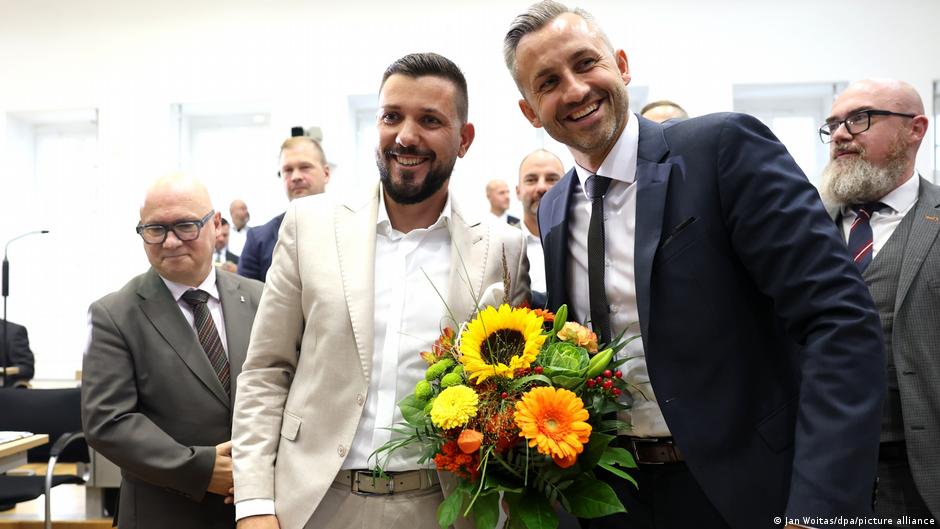
For the first time since the end of World War II, a German state parliament has chosen parliamentary speaker from the far right: Tobias Rausch of the Alternative for Germany (AfD).
The Right Livelihood Award has gone to a female AI researcher and women fighting repression. The Sweden-based prize has been dubbed an "alternative Nobel."
The city of Heidenau, in the eastern centre of Germany, approved a motion by the extreme right party Alternative for Germany (AfD) and the Christian Democratic Union (CDU) banning the planned installation of Stolpersteine, these cobbles of memory paying tribute to the victims of Nazism. A decision that provokes an outcry.
Doha lauded for mediating Brussels-Kigali rupture, showcasing its trusted role in international peace efforts.
In the regional elections of 20 September in the German region of Mecklenburg-Western Pomerania, false testimonies probably generated by IA made it appear that there were ballots without mention of the extreme right party Alternative für Deutschland. In Berlin, where an election was also being held, another false sequence made it appear that AfD ballots were being destroyed.
The extreme right party Alternative for Germany (AfD) is victorious on Sunday 20 September in regional elections in the Land of Mecklenburg-Western Pomerania in the north-east of the country, while the radical left party, Die Linke, won a separate election in the capital Berlin. Both elections resulted in heavy losses for the Christian Democratic Union (CDU), the party of Chancellor Friedrich Merz. Anne Salles, a lecturer in German studies at Sorbonne University, was the guest of FRANCE 24.
In northeastern Germany, in Mecklenburg-Western Pomerania, Chancellor Merz's Conservative party, the CDU, was eliminated from the assembly, failing to achieve the elimination score of 5%, a first for a regional state in the country's history since 1945. The anti-migrant and pro-Russian party, Alternative for Germany (AfD), came first with about 38% of the votes, although a left alliance seems to be in a better position to form the regional executive.
The extreme right party Alternative for Germany (AfD) won the elections on Sunday 20 September in the Land of Mecklenburg-Western Pomerania, in the north-eastern part of the country, although it was its worst election result since 1949, called "desaster" by Chancellor Friedrich Merz. The Left Party (Die Linke, radical left) is also at the head of a separate election in the capital, Berlin.
German Chancellor Friedrich Merz on Sunday described his CDU party's heavy losses in two regional elections as a "disaster", but vowed to push ahead with a reform drive. The far-right Alternative for Germany (AfD) party took first place in the northeastern state of Mecklenburg-Western Pomerania, exit polls showed, and also gained in strength in another election in Berlin.
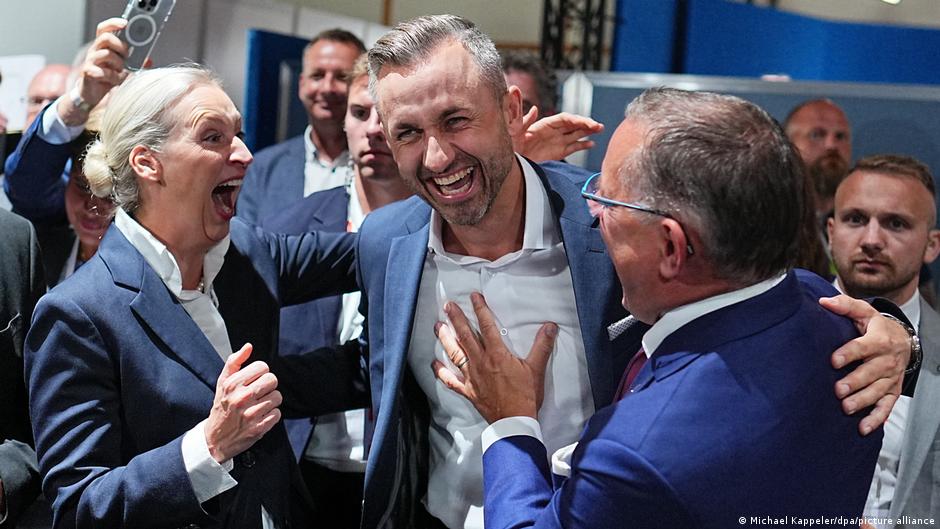
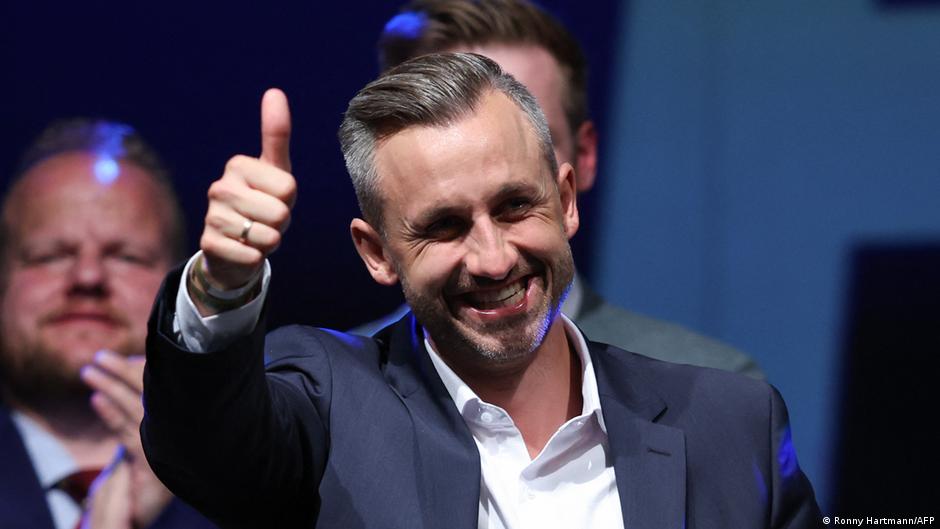
With well over 40% for the far-right Alternative for Germany (AfD), Saxony-Anhalt has witnessed a landmark election night. DW's reporters were on the ground.
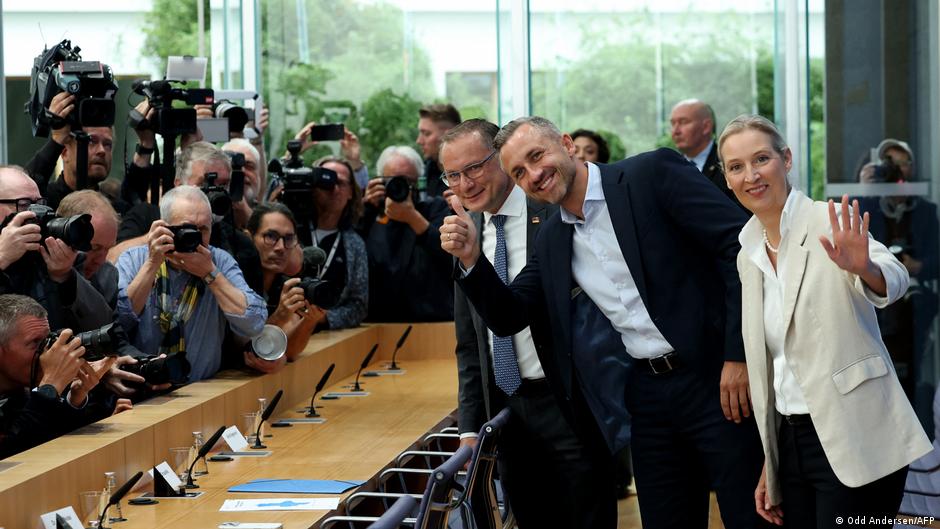
Following its record election success, the far-right Alternative for Germany aims to form a government. What options does it have without the absolute majority?
The far-right Alternative for Germany (AfD) party won the Saxony-Anhalt state election but without an absolute majority in parliament. Other European nations were wrestling with the impact of the results. Follow DW.
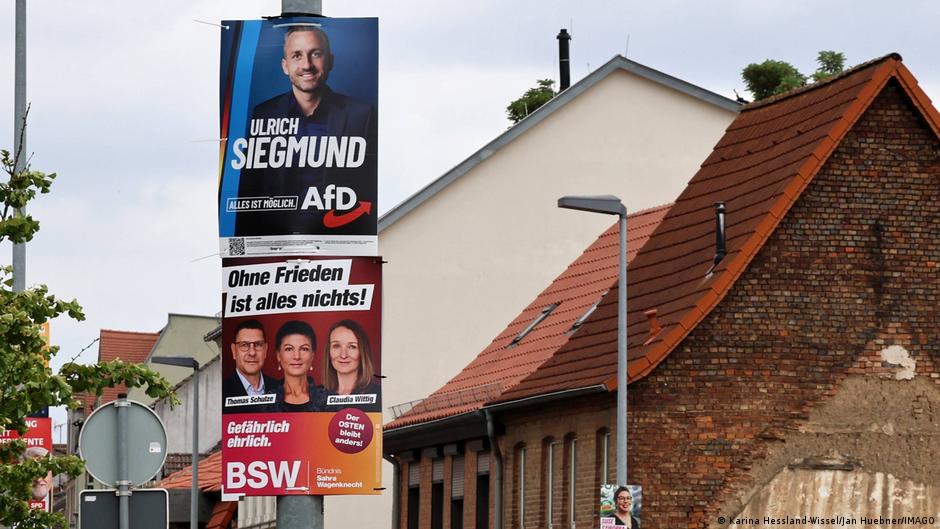
The Sahra Wagenknecht Alliance (BSW) could help the Alternative for Germany (AfD) into power in Saxony-Anhalt. But the BSW is riddled with infighting
Emboldened by its win in Saxony-Anhalt, the far-right Alternative for Germany wants the government to change its Ukraine and Russia policies. Berlin is staying the course, but support is fading — especially in the east.